


Greetings!
It’s been over a month now since I wrote that I’d send a last update from our bikepacking adventure “in the coming days”. I must have meant “many many days”. Better late than never?
Truthfully, our last week in Canada was a whirlwind: bike problems, an escape from the wilderness, car rental, a bit of touristing, another escape of sorts (more on that below), a rodeo (?!), and then we were back in the U.S. and on with our lives, visiting family and figuring out what was next. It took no time at all to feel completely displaced from our bikepacking adventure, like it was another lifetime ago. The flight from Calgary to Minneapolis somehow wiped the slate clean—and also the nightly routine of chronicling the adventure.
But as noted in the last blog, I did want to provide one last update with some summary info from the full bikepacking journey, some notes on our final days in Canada, what we learned from this first bikepacking trip, and a quick bike update. And so, here it is. A bit of a wrap up.
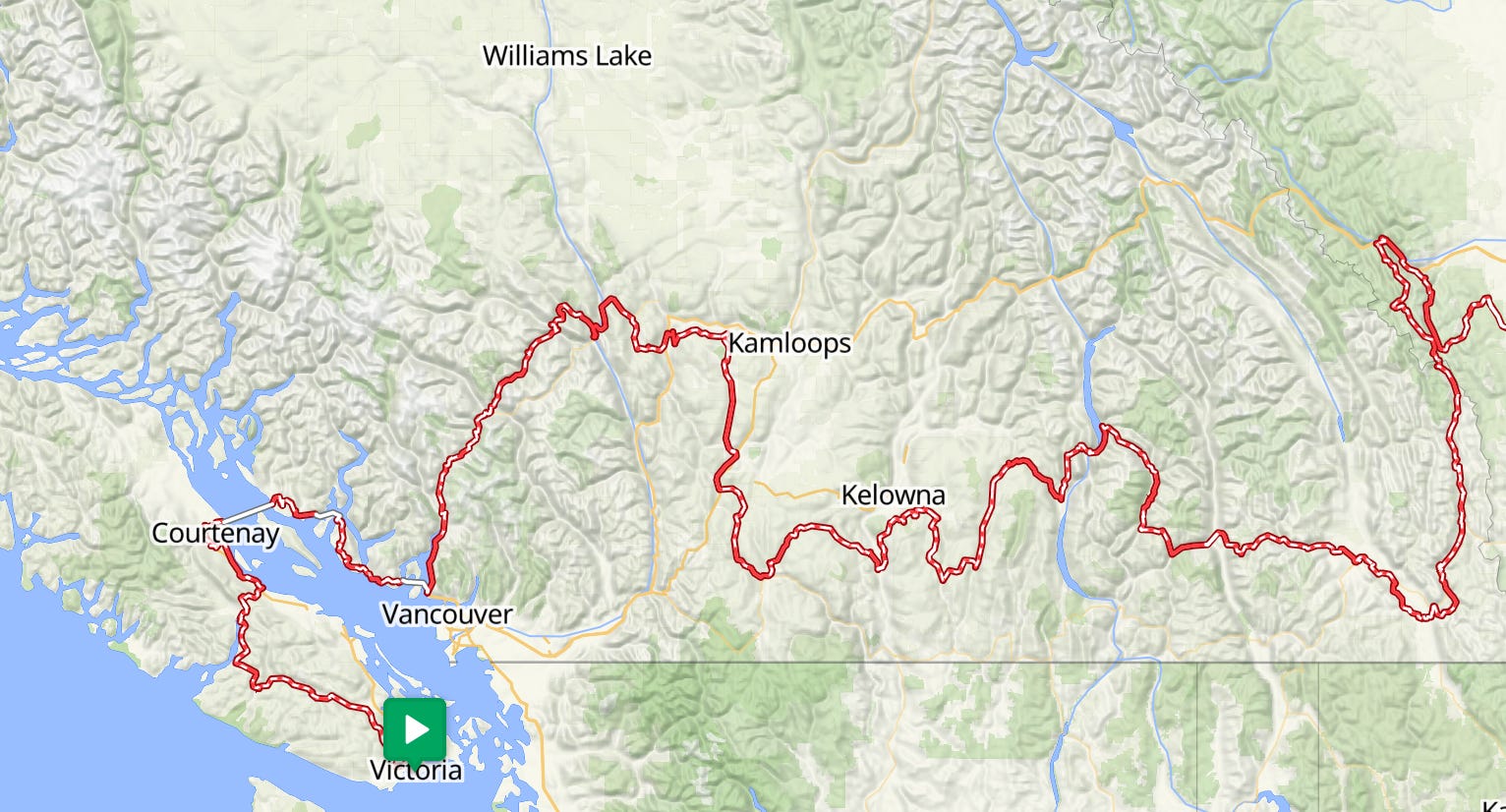
A Summary: Riding Across British Columbia
While we didn’t hit our intended endpoint in Jasper, Alberta, we jusssssst managed to ride all the way across British Columbia, my bike meeting its final demise on Elk Pass right around the border of British Columbia and Alberta. We did ride into Alberta a bit, though technically most of what I what I was doing at that point was coasting.
But still, riding across British Columbia was nothing to shake a stick at. Lots of steep climbing, hike-a-bike, and rocky descents. But also incredible scenery and cool little mountain towns.
Here are some of the highlights, in numbers:
Days on the Road
Start Date, Victoria, BC: 5/23/26
End Date, Boulton Creek, AB: 7/4/26
Total Days (including zeros/neros): 43
Total # of Zeros (days with no biking): 10
Total # of Neros (days w/ less than 10 miles of biking): 1
The numbers above include the total number of days from the start of the journey at the Trans-Canada Mile 0 sign in Victoria, BC on May 23 through our (unfortunate) end at the Boulton Creek Campground in Alberta on July 4.
As a refresher, a ‘zero’ is a complete rest day, though often there is some biking involved to run errands... which feels decidedly unrestful, but technically speaking there is no forward progress being made along the route.
A ‘nero’ is ‘near zero’ miles, which in thru-hiking we typically define as less than 10 miles. We really only had one nero on our entire journey, which was simply moving from a campground on the outskirts of Squamish to a motel in town. It was a three-mile day, so basically a zero. There are probably times we spent a zero biking more just to get groceries.
Eleven days is probably a lot of zeros over the course of a 43-day adventure (~25% of our days). If we were on a more stringent timeline, we would/could have cut some of them out; however, we were out to enjoy the journey and, with that in mind, stopped wherever we wanted. There are a lot of cool little towns in British Columbia.
As a comparison, we took 19 zeros along our 146-day journey on the Pacific Crest Trail—about 13% of our time. But there is a definitely a timeline to finish the PCT.
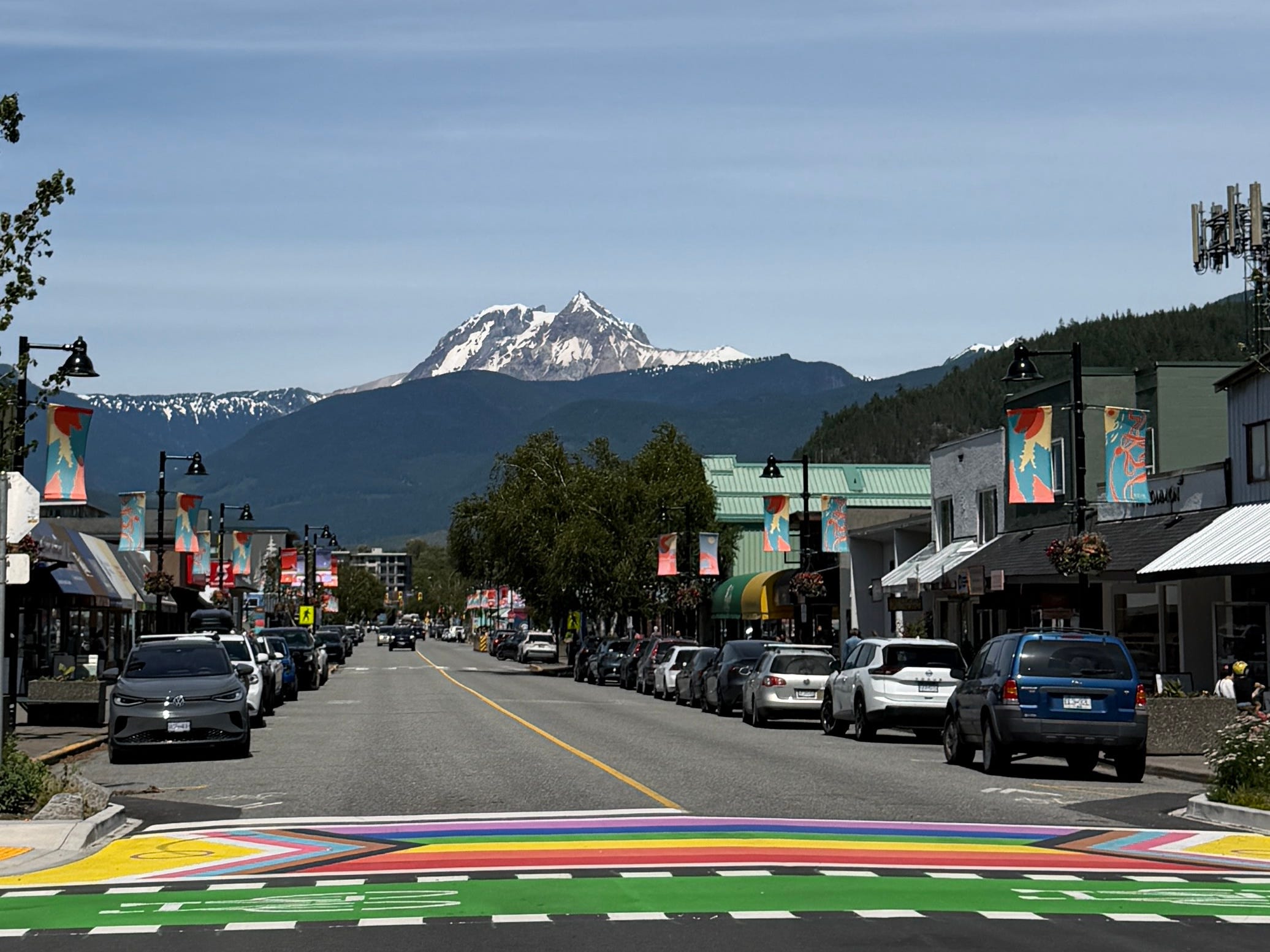
Mileage
Total Mileage: 1,360.83 miles (2,190.04km)
Average Daily Mileage (including zeros): 31.65 miles/day
Average Daily Mileage (without zeros, cycling days only): 42.52 miles/day
With our ‘enjoy the route’ pace, our average mileage over the 43 days along the route came out to 31.65miles/day. So... if we were to ride every day of the 43 days, we could have ridden only ~31 miles a day and covered the same distance.
But that’s no fun, we like zeros!
If you discount the 11 zero/nero days, the average miles for days that we were actually riding comes out closer to 42.5 miles/day.
Before we started this journey, we figured our daily average would probably be around 50 miles/day, but we also didn’t really have much to base that on. The average is also driven by the actual terrain you’re covering over those miles (which is a lot of climbing and elevation in British Columbia) and where the logical stopping points are for the day (towns, campgrounds, other camping areas, etc.). Of course, what is a logical stopping point also depends on how strong of a cyclist you are and how quickly you’re moving down the route.
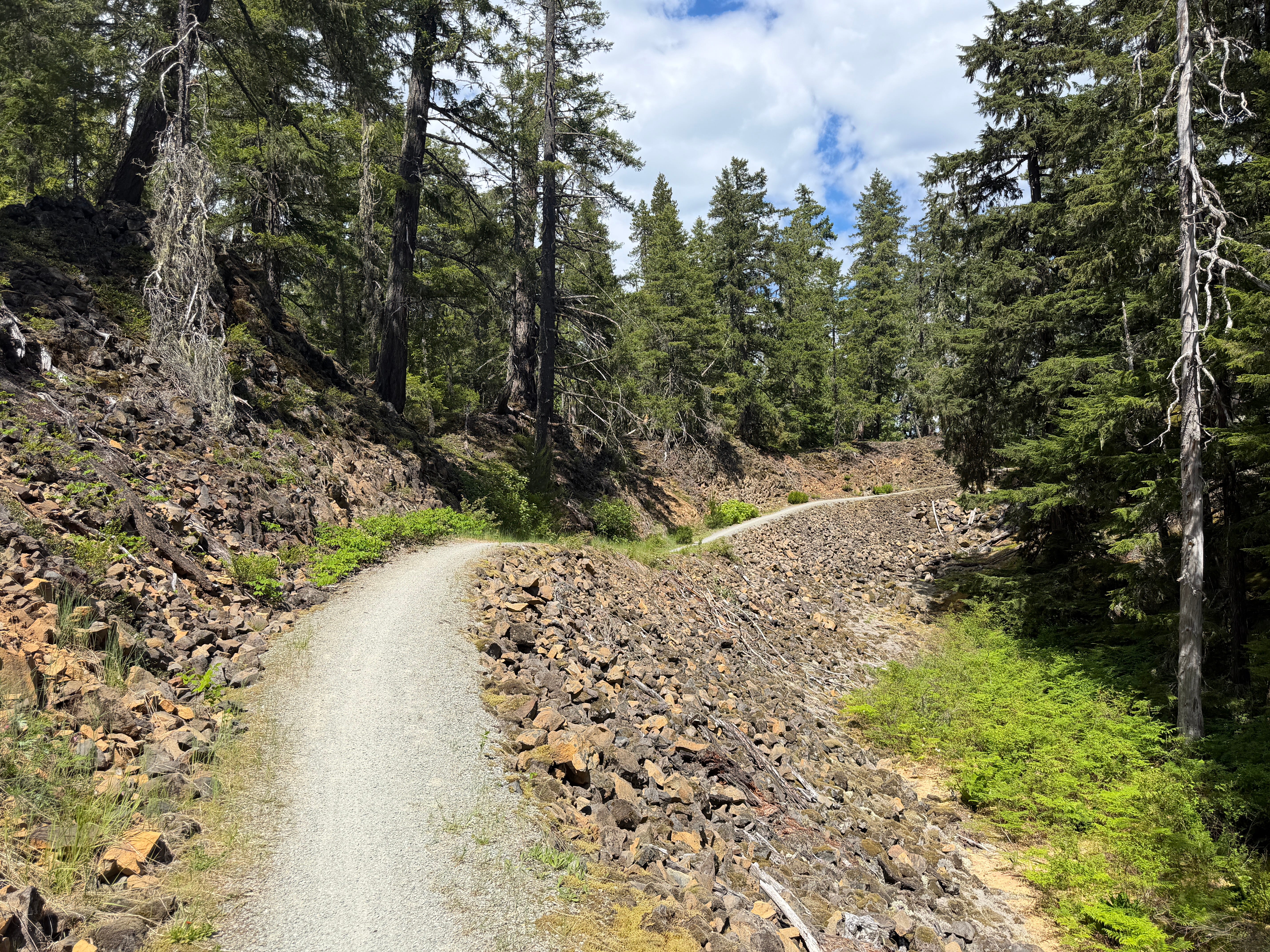
Elevation
Total Elevation Gain: 91,354 feet (27,845 meters)
Average Ascent Per Day (ride days only, 32): 2,854.8 feet
Biggest Elevation Gain in One Day: 6,844 feet (2,086 meters)
Highest Altitude: 6,800 feet (Gray Creek Pass)
Had we made it all the way to Jasper, our total elevation would have soared over 100,000 feet. Is this still bothering me? No, of course not. Obviously you can tell I’m totally over it. Which is obviously why I brought it to your attention.
At any rate, we biked uphill a lot. Sometimes those hills were so steep I was pushing my bike. In case you were wondering, 91,354 feet is 17.3 miles. All strung together, we basically would have ridden into the stratosphere (that’s right, look it up). Into “Near Space” territory—so, obviously we rode pretty far.
Our biggest elevation gain day was, unsurprisingly, also the day that we hit the highest elevation of the trail, which was Gray Creek Pass. While there was a lot of climbing in British Columbia, the actual elevations we topped out at weren’t anything that crazy, especially if you are reading this from Colorado and thinking, “I hiked higher than that this weekend.” Touché.
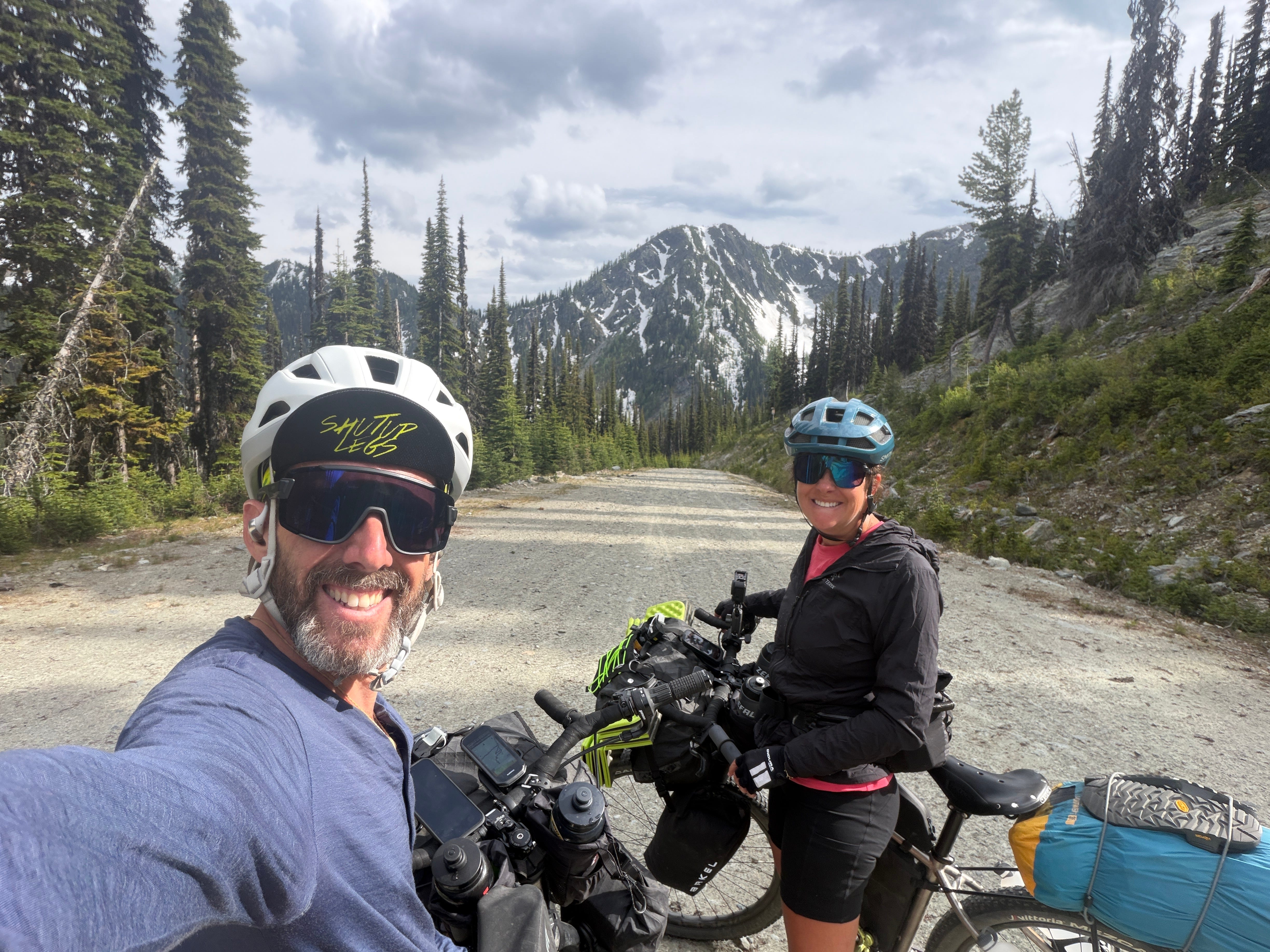
The Great Outdoors vs. the Great Indoors
Nights in the Tent: 11
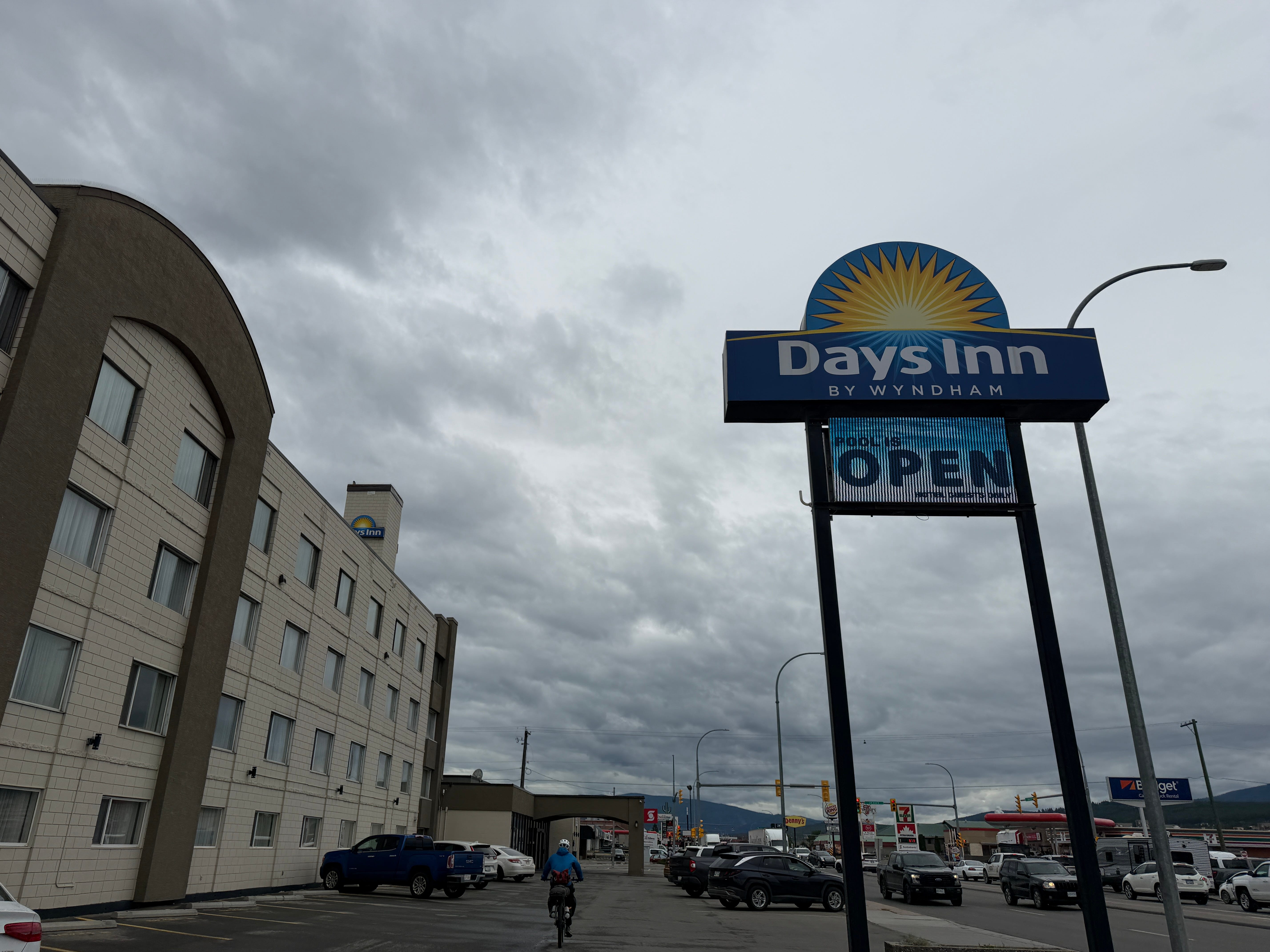
Nights Indoors (motels, Airbnb, etc.): 32
*Nights indoors includes our last night, which was an escape to Calgary after the bike mechanical issues. We’d *planned* to camp... followed by about a week+ of camping in Banff National Park and up the Icefields Parkway.
Of the nights in the tent,
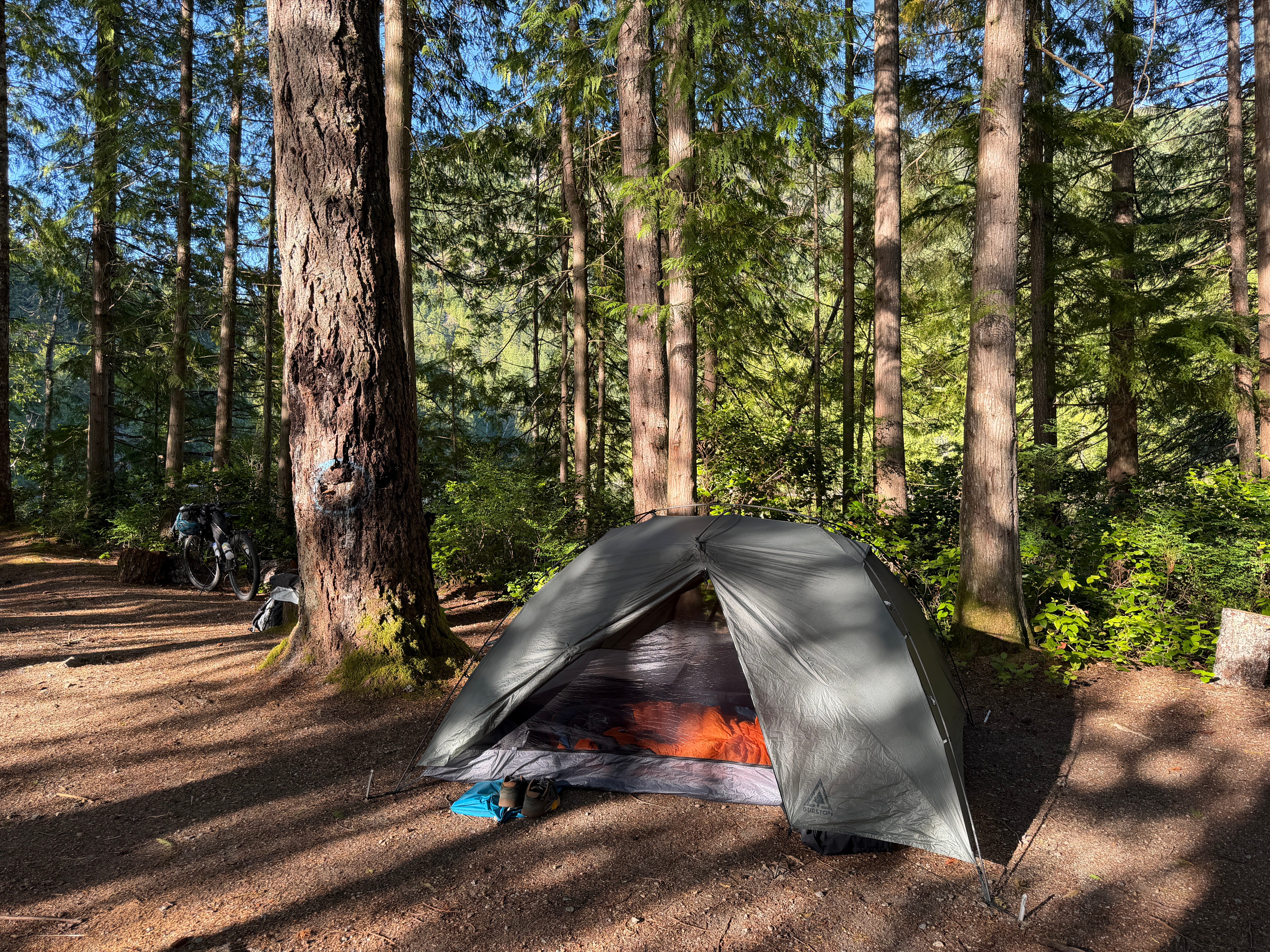
Nights at a Campground: 9
Nights Backcountry Camping (No Campground): 2
Of the actual campgrounds (9) we stayed at,
Campgrounds with Showers (tres luxury): 4
Campgrounds w/out Showers (boo hoo): 5
Honestly, we thought we’d camp more often, but when you’re riding through towns with fair frequency and it’s hot or rainy or buggy.... It can be really hard to turn away the indoor comforts of air conditioning and showers. The route had a good number of reasonably priced motels, Airbnb/rentals, and other accommodations. We obviously took advantage of that.
There are also several days when we planned on camping, but then something else came up... like a dog attack in hillbilly country. Or weather. For our weather, it generally seemed like we were alternating between weeks that had several rainy days and weeks that were very hot. Generally speaking though, I felt like we had pretty decent weather for a long bikepacking journey.
A couple of our most memorable nights in the great outdoors, for better or for worse:
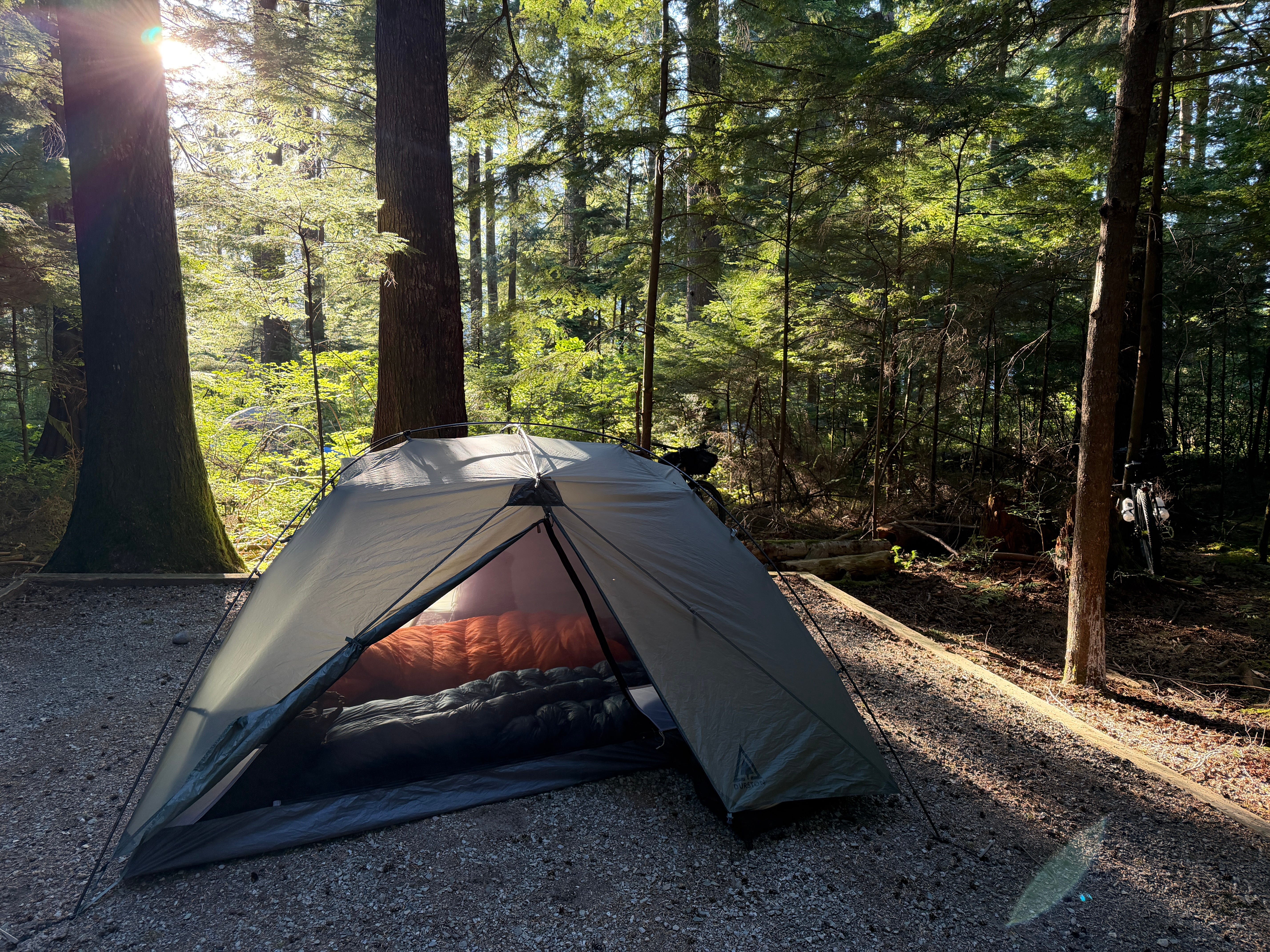
For better: Our first night camping was on the second night of our journey. We camped with the two other bikepackers we set off with from Victoria, Piper and Wes, on a rocky beach along Lake Francis. It was a beautiful spot and a beautiful evening.
For worse: Same spot. Heavy rain started in the middle of the night and continued into the next day. We packed up in the rain and rode 30 miles through freezing rain into Port Alberni, where we got a hotel for the night.
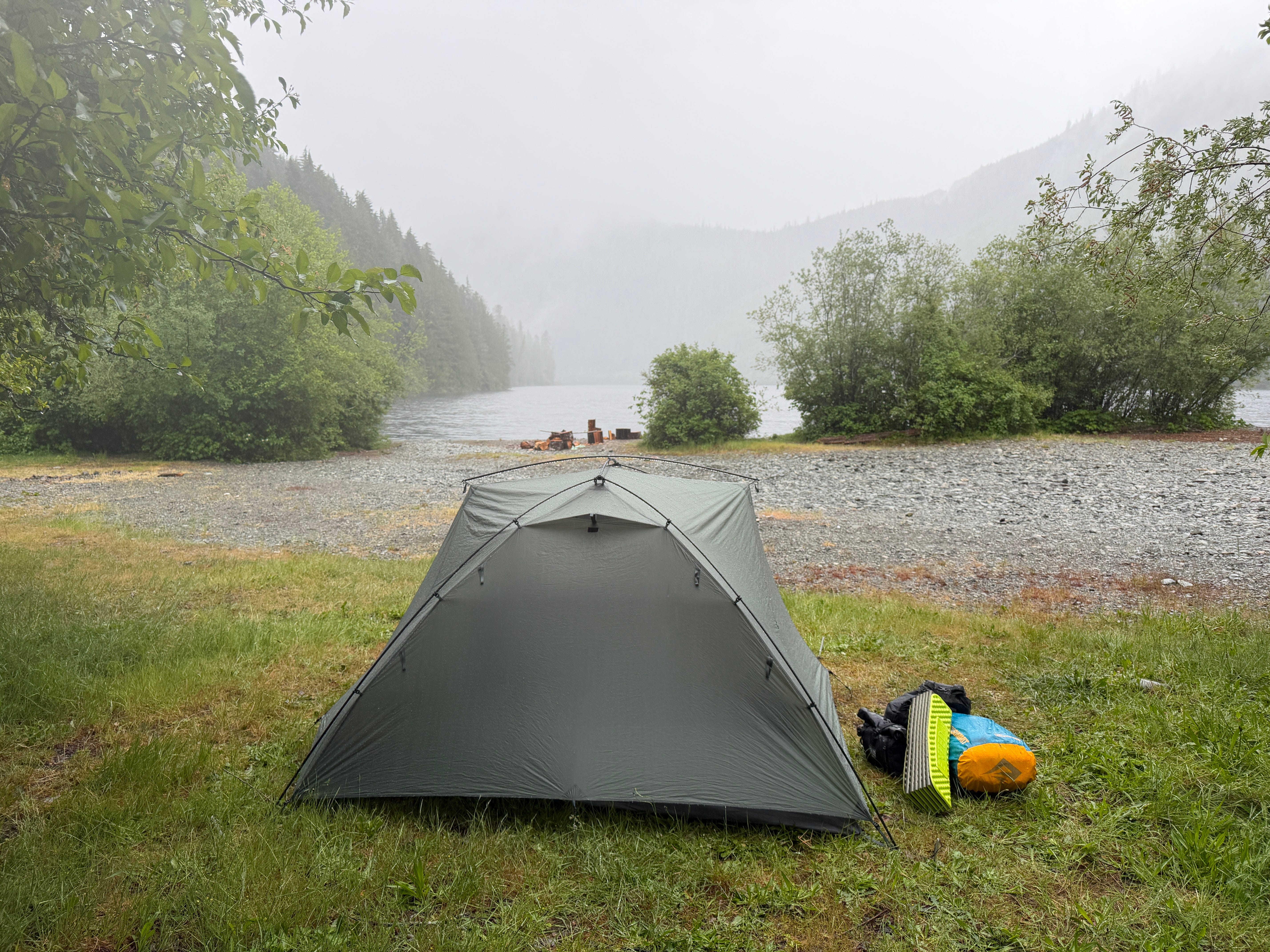
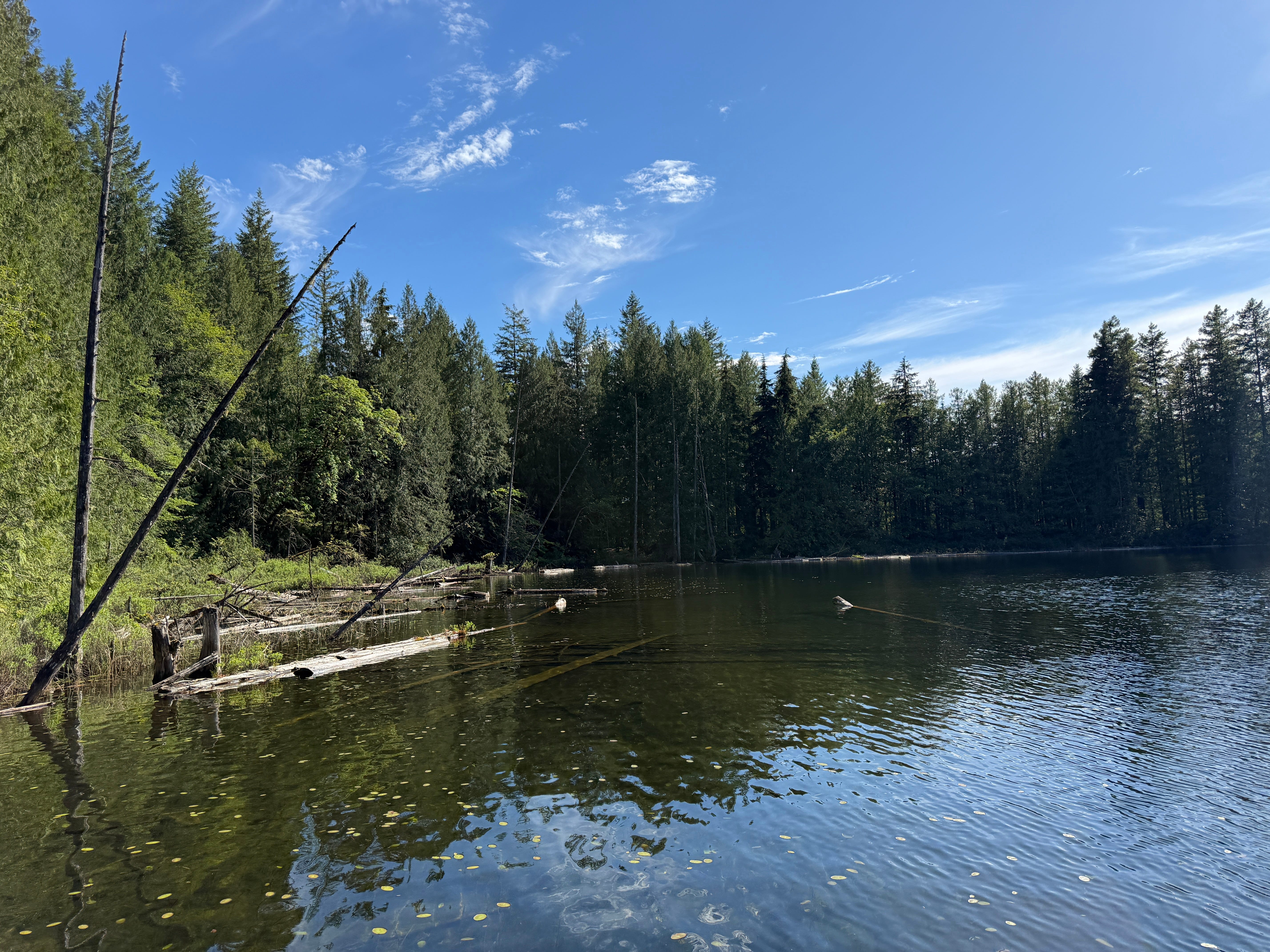
For better: Three nights later, we shared a campsite with Wes along Klein Lake on the Sunshine Coast. We took an afternoon dip in the lake and enjoyed amenities like a picnic table, a very clean pit toilet, and an all-night serenade by frogs.
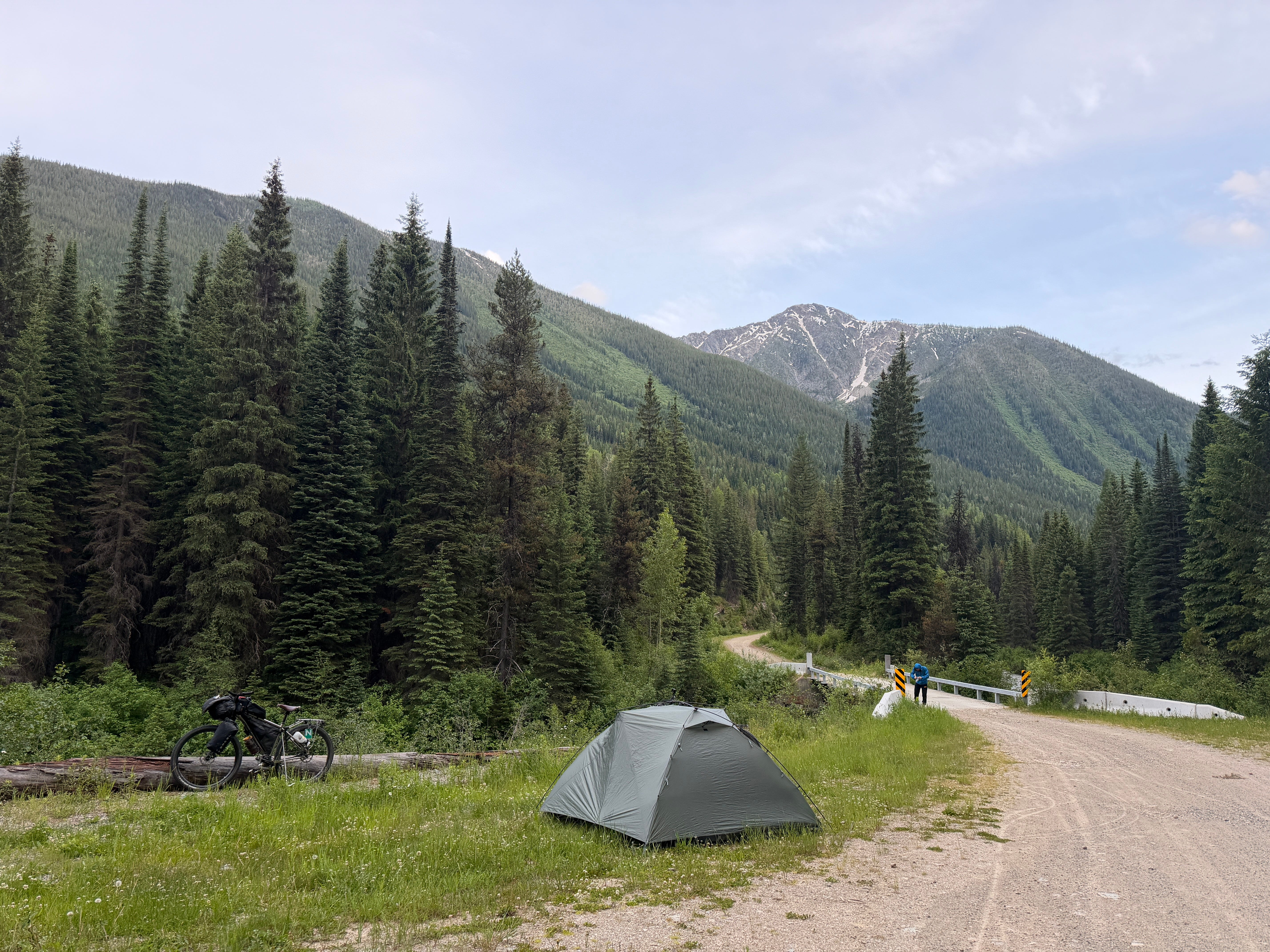
For worse: Descending from Gray Creek Pass, we set up camp along a road (unused/inaccessible by motorists) where we proceeded to be absolutely decimated by mosquitoes and no-see-ums. I have scars....
And there were plenty more great and less than great experiences in the great outdoors.
Zeros & Neros
As mentioned above, we took 10 zeros and 1 nero. Our ‘nero’ day was basically just a few miles from the campground outside of Squamish into town, where we spent a couple nights at a hotel, so we basically had two full days there.
Towns We Took Zeros/Neros In:
Longest Time Between Zeros: 8 days (Victoria to Squamish)
Shortest Time Between Zeros: 1 day (Squamish to Whistler)
Some of these zeros were for rest, some were for weather avoidance, and some were simply because we wanted some time to check out the town. Some were all three.
Overall, we really enjoyed all of the towns we took zeros in, possibly with the exception of Whistler. I think Whistler is probably a blast in the winter if you’re hitting the slopes, but the summer-time ski-town vibe is a little pretentious and everything is needlessly expensive. We waited out some weather here and celebrated our 10-year anniversary with some spa time and massages, so it was still a nice stop, but without a reason to stop, I’d take a rest day in Squamish and continue past Whistler without an extra day there.
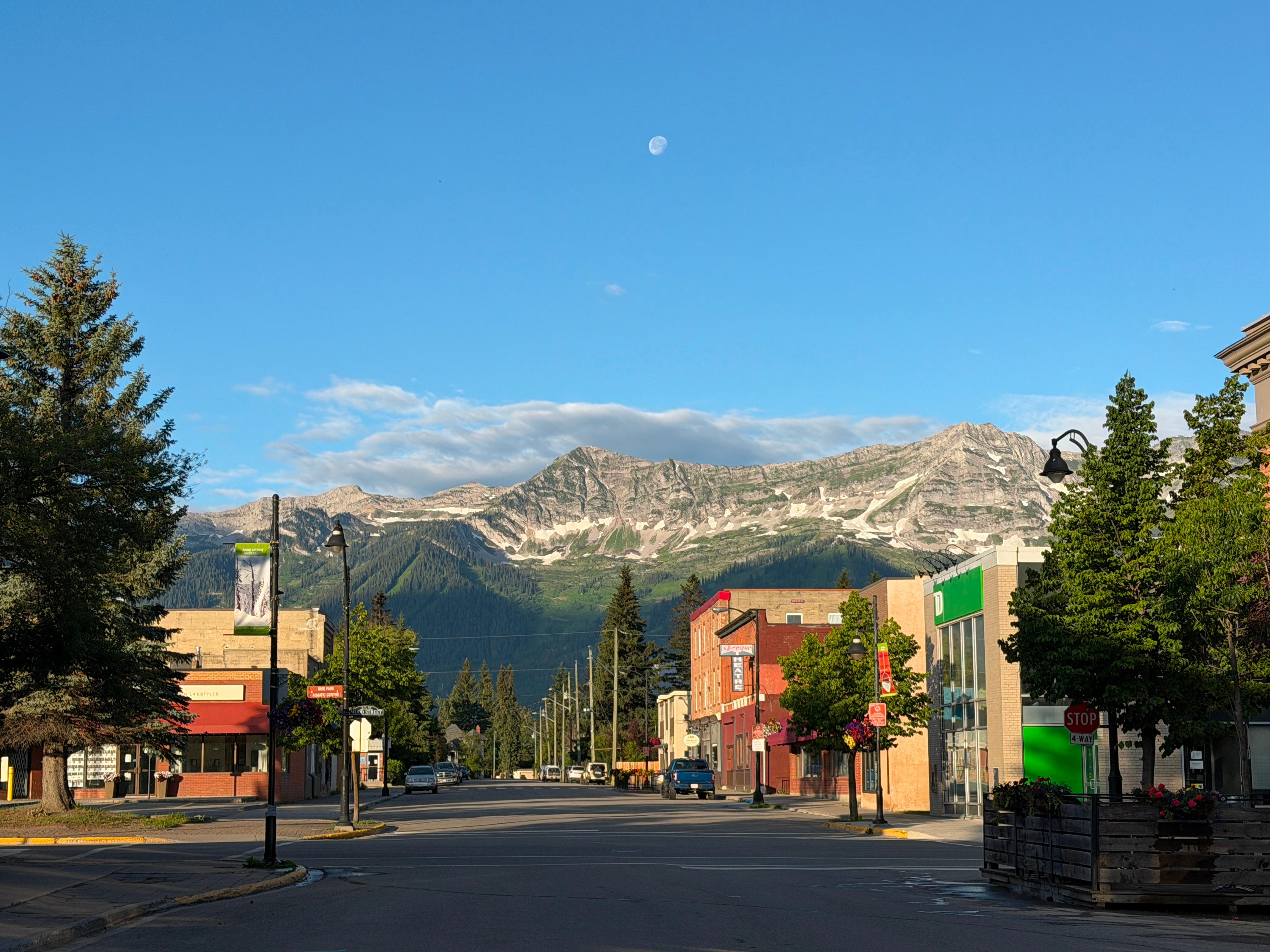
It’s hard to name a favorite town along the route... we really enjoyed the rest of the stops. Fernie is spectacular. It is surrounded by beautiful mountain scenery. We spent four days there waiting out a lot of rain and I’m glad we did, otherwise we would have never gotten to see the amazing mountain views that surround the town (and we would have been very wet out in the wilderness).
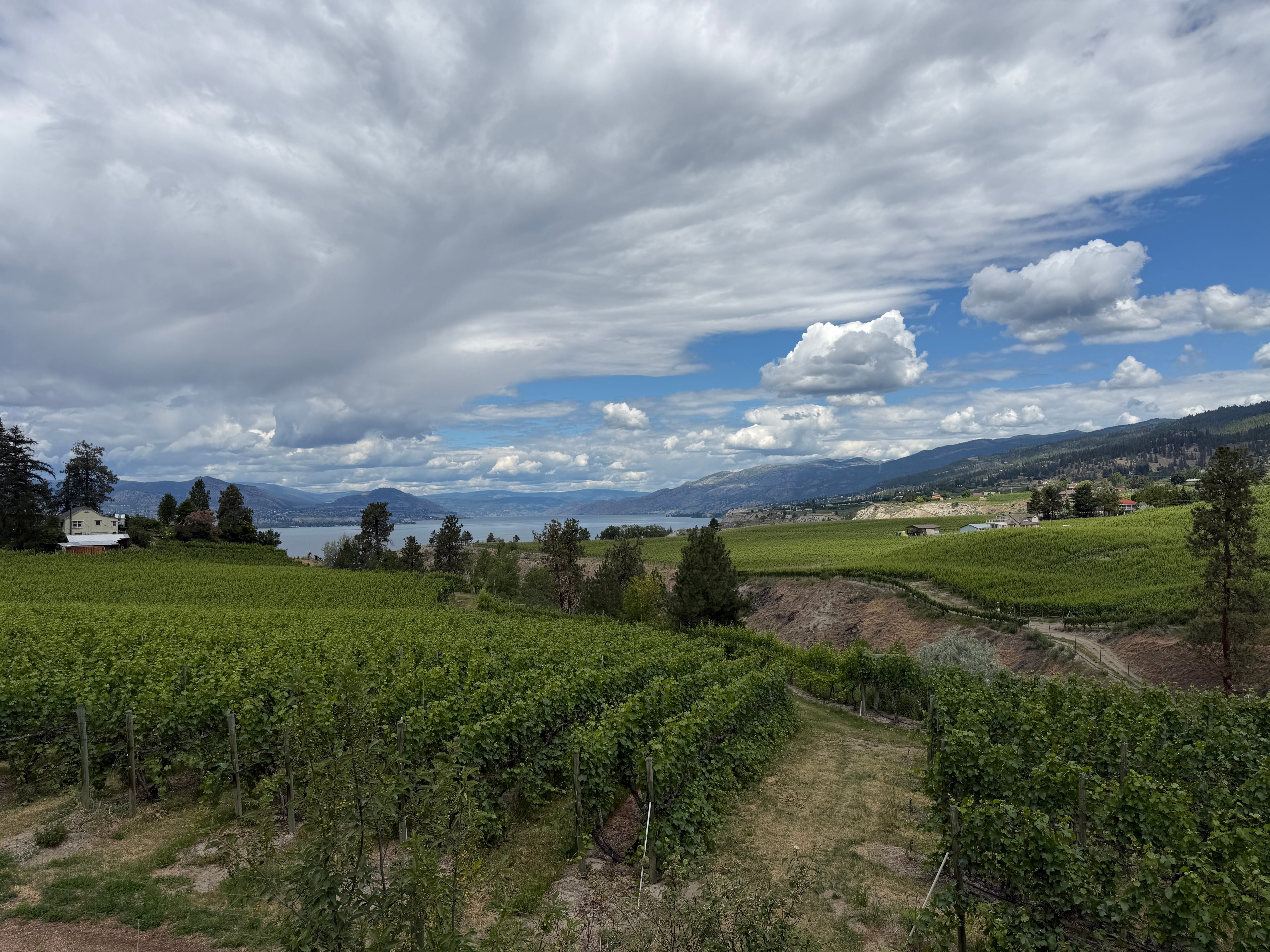
We also really enjoyed Nelson, Squamish, and Penticton. All of these have great little downtown hubs, nice coffee shops, plenty of good eats, and all kinds of small mountain-town charm. Squamish is a laid-back, bougiefied dirt-bag climbing town; Penticton is a larger city that sits on Okanagan Lake—ringed by vineyards and great cycling trails, and Nelson occupies a beautiful little spot along the West Arm of the Kootenay Lake. All worth a day or more.
We also enjoyed Merritt. This stop was more of rest day for us rather than specifically wanting to see the town, but it has a cute little downtown themed around its fame as the Country Music Capital of Canada, and there were some nice coffee shops—which, as you can tell, is a bit of unofficial criteria for what makes a good zero-day town. When you are passing through towns and looking for places to relax, coffee shops feature as an important component.
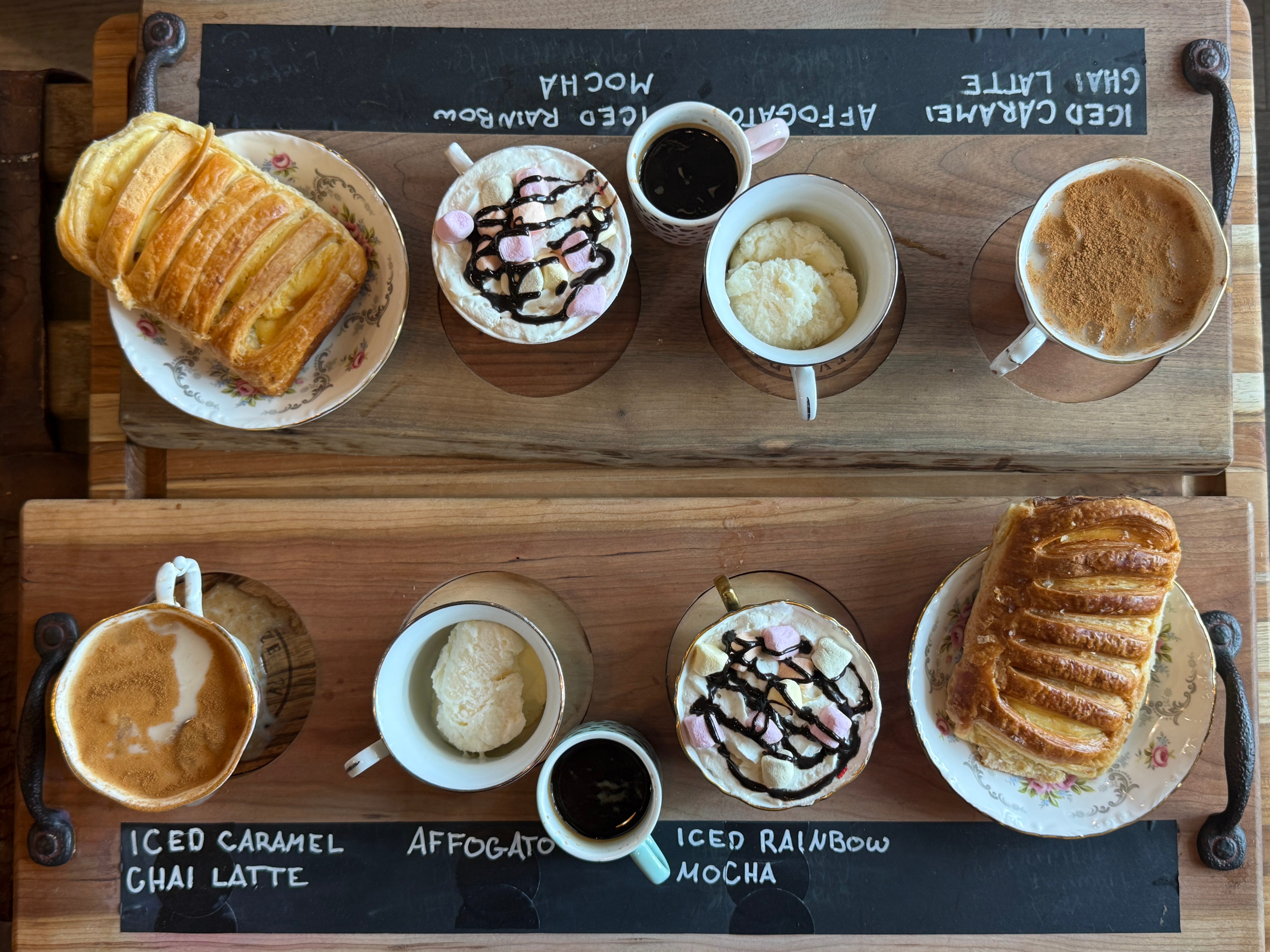
We also had a very short ride day from Royston to Powell River which gave us a chance to take care of my squeaky pedals and relax in Courtenay a bit—you guessed it, at a coffee shop. This was also a very cool little town and our last stop on Vancouver Island before the ferry back to the mainland.
If we weren’t already doing a ton of biking, each of these towns had plenty of other cycling and mountain biking trails nearby. Alex, the Aussie we met along the route, was bikepacking on a downhill mountain bike, so he spent plenty of time in Nelson, Fernie, and elsewhere shredding downhill trails.
And Finally, Mechanical Stuffs...
I don’t have any specific numbers for this section really, but I can make some...
Number of Squeaky Pedals: 2 (both on my bike, far more frequently than I cared for)
Number of Flat Tires/Tire Issues: 0! (Can you believe it?)
Number of Drive Belt Issues: 2
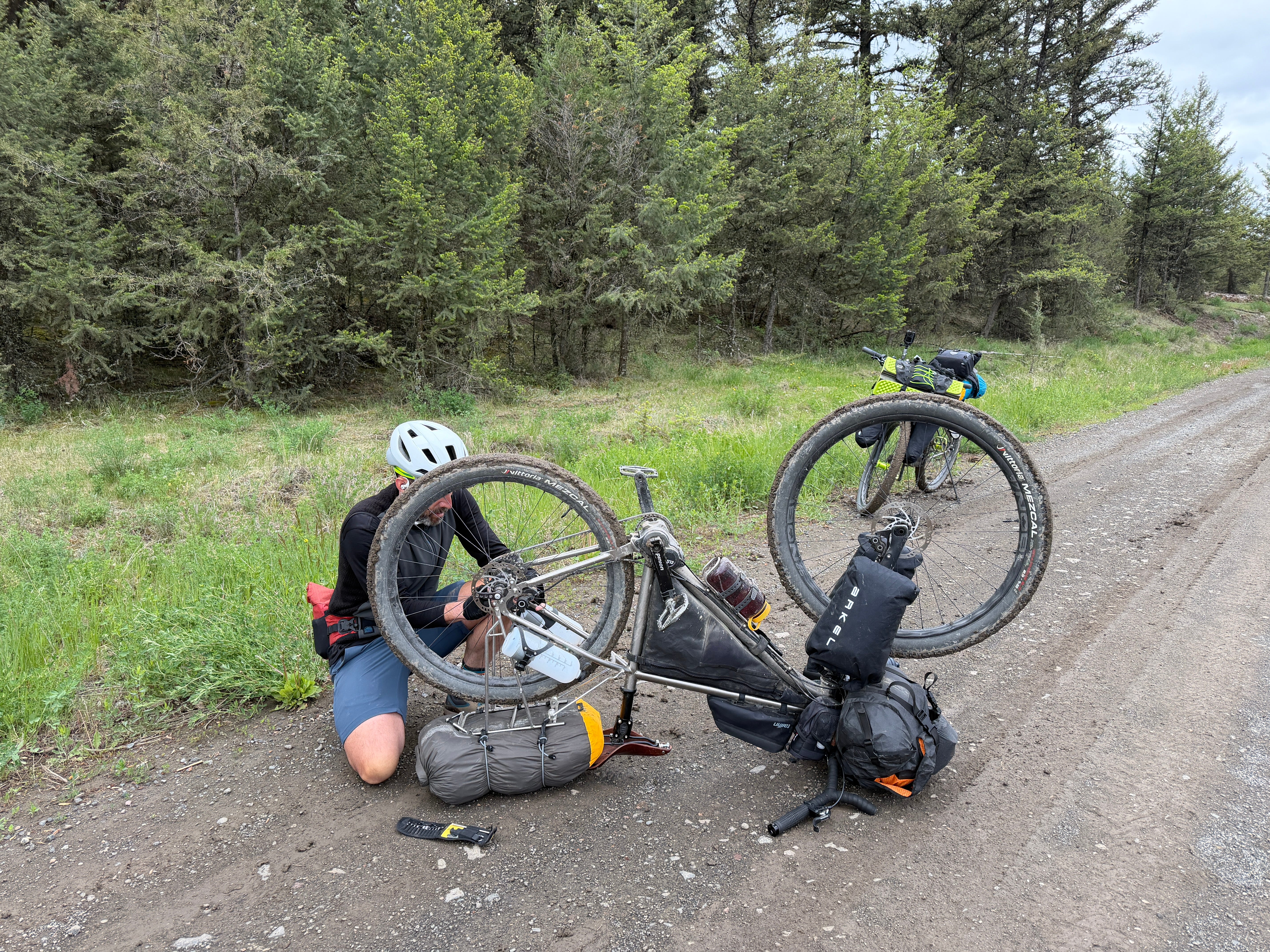
Number of Rear Hub Failures Causing End of Journey: 1 (that’s all it takes!)
We honestly had very few mechanical issues along the route. We carried tools/gear to fix any common issues—anything to do with tire issues and other common minor repairs.
As mentioned in previous blogs, our bikes had Pinion gearing with a drive-belt. Overall this system was low maintenance and worked fantastically for us. We each dropped our belt once. Mine was after high torque on the pedals when turning on to a very steep drive up to a motel in Powell River. Shawn’s was during our day in the peanut butter mud. Both were relatively quick fixes and, with Shawn’s handy work, were never again an issue.
Of course, the big mama of the mechanical issues was that one there at the end... the failure of my rear hub. Game over. I’ll provide an update on this below.
I think that is all the numbers and nerdy stuff I really have to share, but if you have any specific questions about the journey, feel free to drop a line in the comments.
The Icefields Parkway: Unfinished Business
As noted in the last blog, after leaving the bikepacking route and transport to Calgary, we rented a pick-up truck to haul our bikes around so we could still visit Banff National Park and the Icefields Parkway. Of course, we had wanted to bike this stretch—the Icefields Parkway was the entire impetus for this bikepacking journey—but as long as we were so close, I thought we should still check it out anyway. Who knew when (or if) we’d be back?
And so, we were back in Banff on the same day we would have biked into town, which was at least convenient since we already had a campsite reservation. We spent the afternoon/evening in/around Banff, which was a complete circus. It was everything we hate about deeply popular places in the summer: crowded, expensive... crowded. Like a zoo in town, even though everyone is supposedly there for the wilderness. Had we come in on bikes, we would have been a lot less frustrated. We wouldn’t have to worry about the congested roads, parking ... or the very expensive cost to do so.
After breakfast in town the next morning, we left.
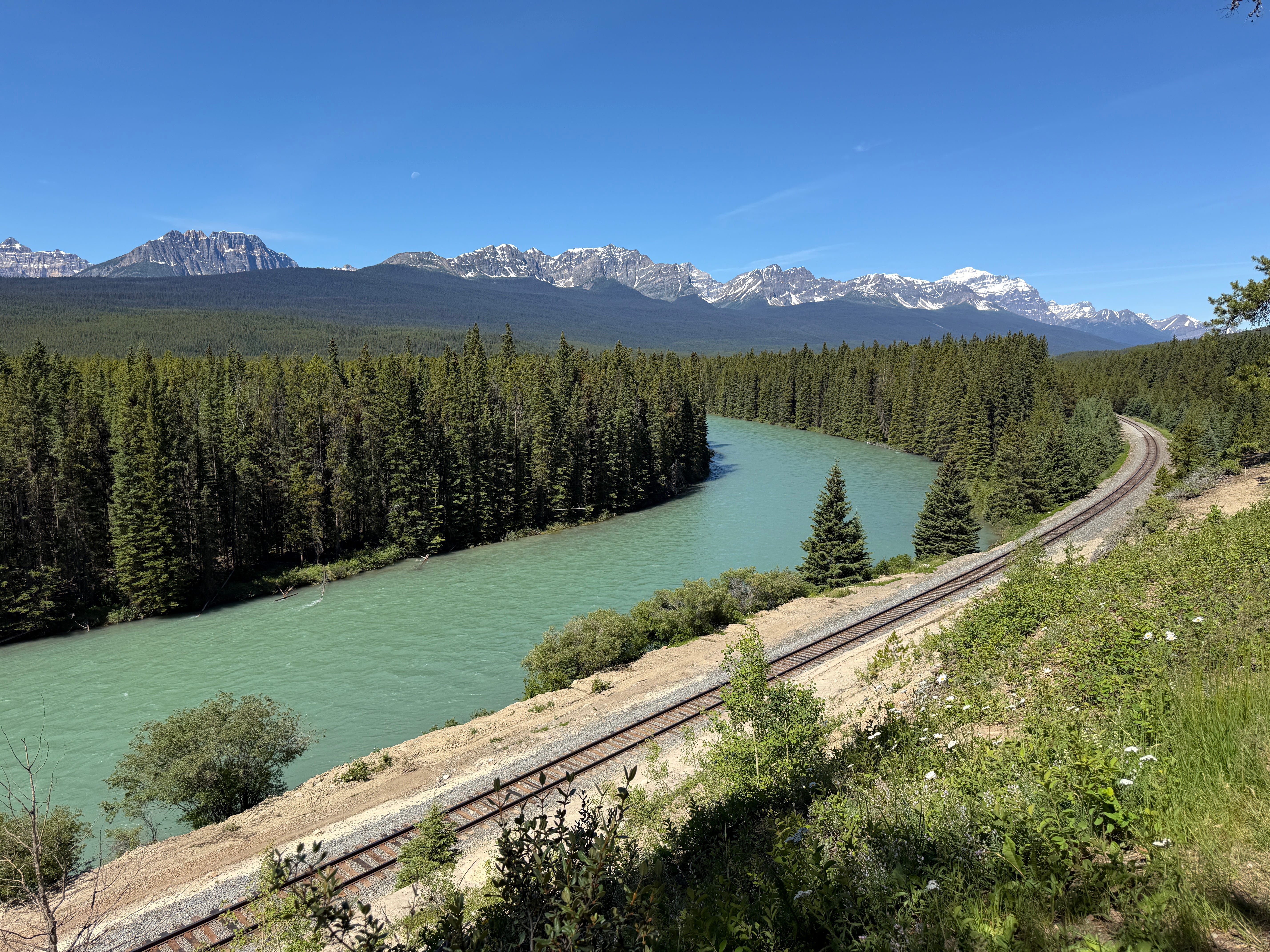
We spent the morning slowly making our way northward along the Bow Valley Parkway, making stops at scenic viewpoints and taking a short hike through Johnston Canyon. We had two nights booked at the Lake Louise Campground. That afternoon, we hiked up to Lake Louise for evening views of the lake.
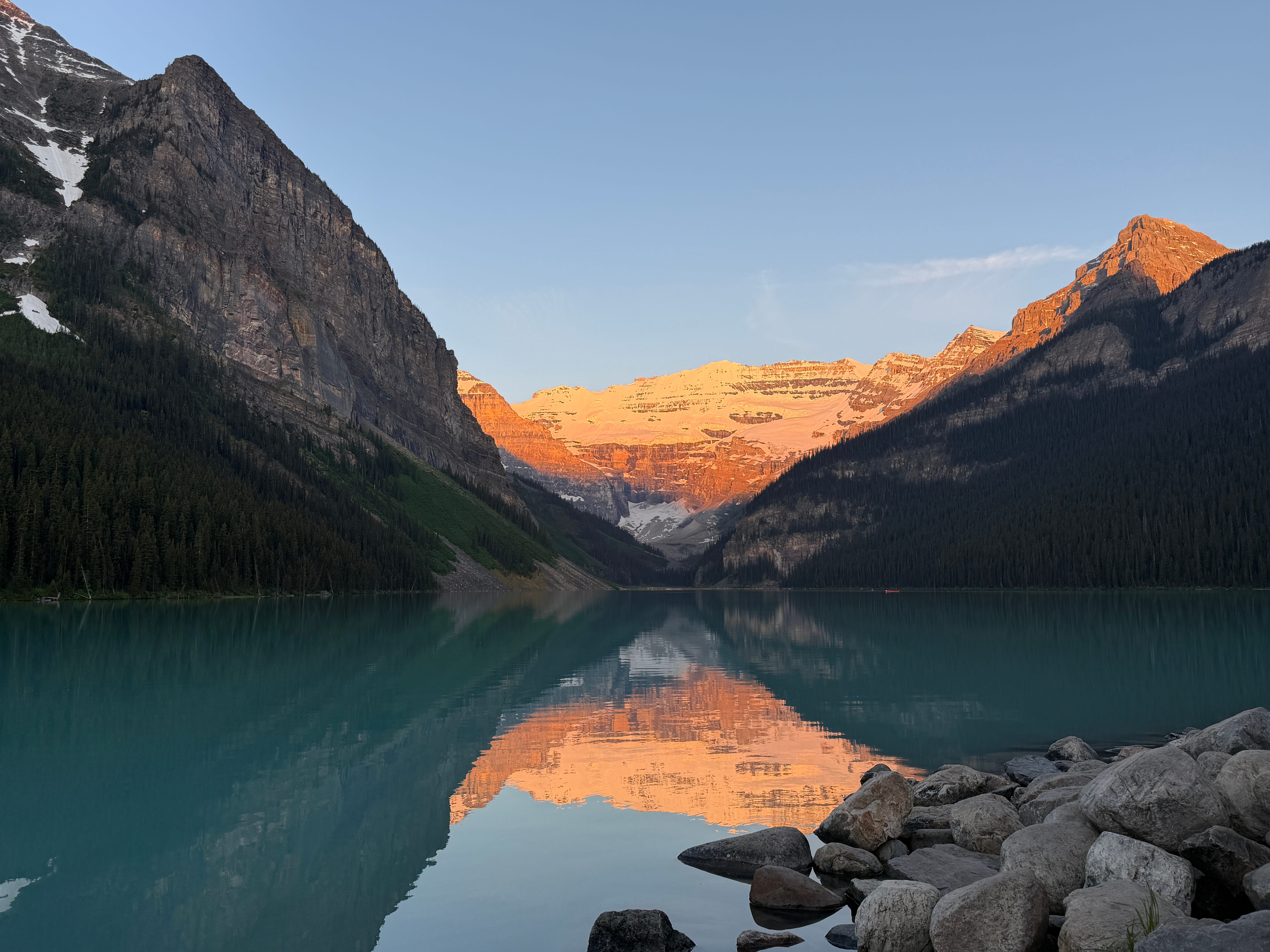
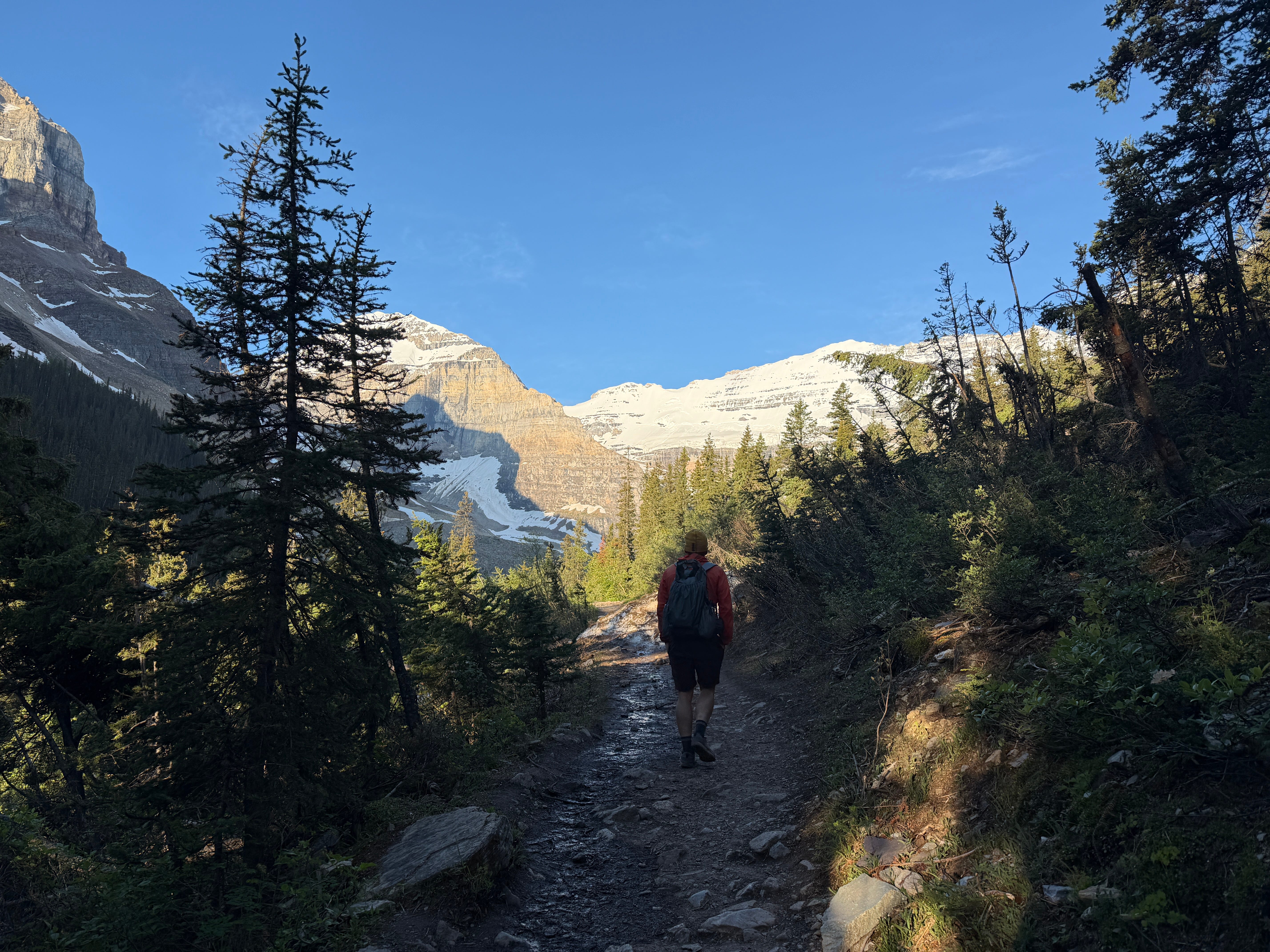
The next day, we returned to Lake Louise. The morning light was much better. We walked along the north side of the lake, taking photos and continuing up along the Plain of Six Glaciers hiking route. We saw only a couple others on the trail, which was a nice change from the chaos of the towns. We made it to the teahouse along the route just before they opened at 8am and had the place mostly to ourselves, other than the chipmunks running about.
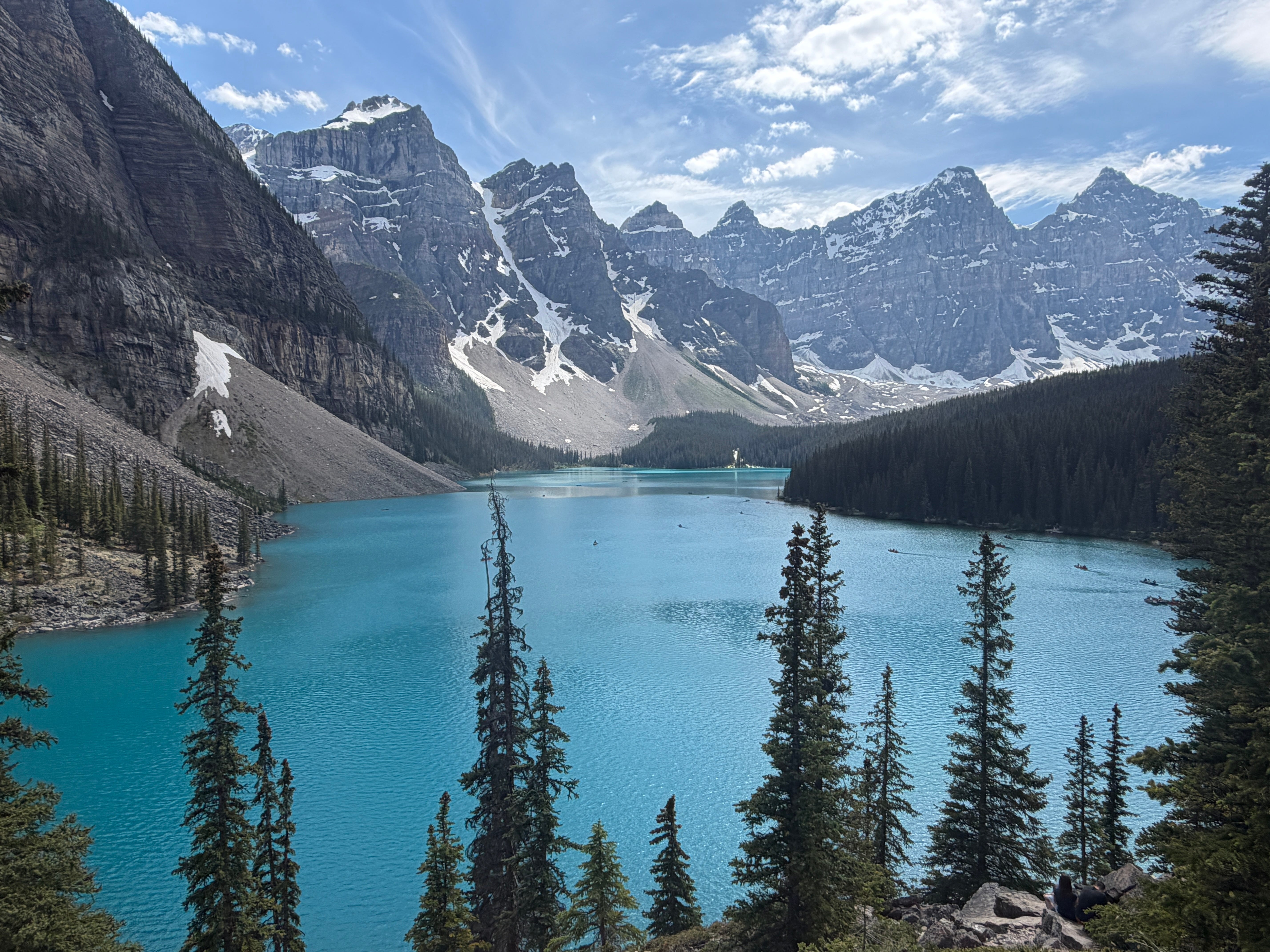
Later in the afternoon, we caught a shuttle up to Moraine Lake, which was an even more dazzling turquoise blue than Lake Louise. It was no less crowded, but Shawn and I found a nice viewpoint to just sit and enjoy the view. I did a little sketching/painting.
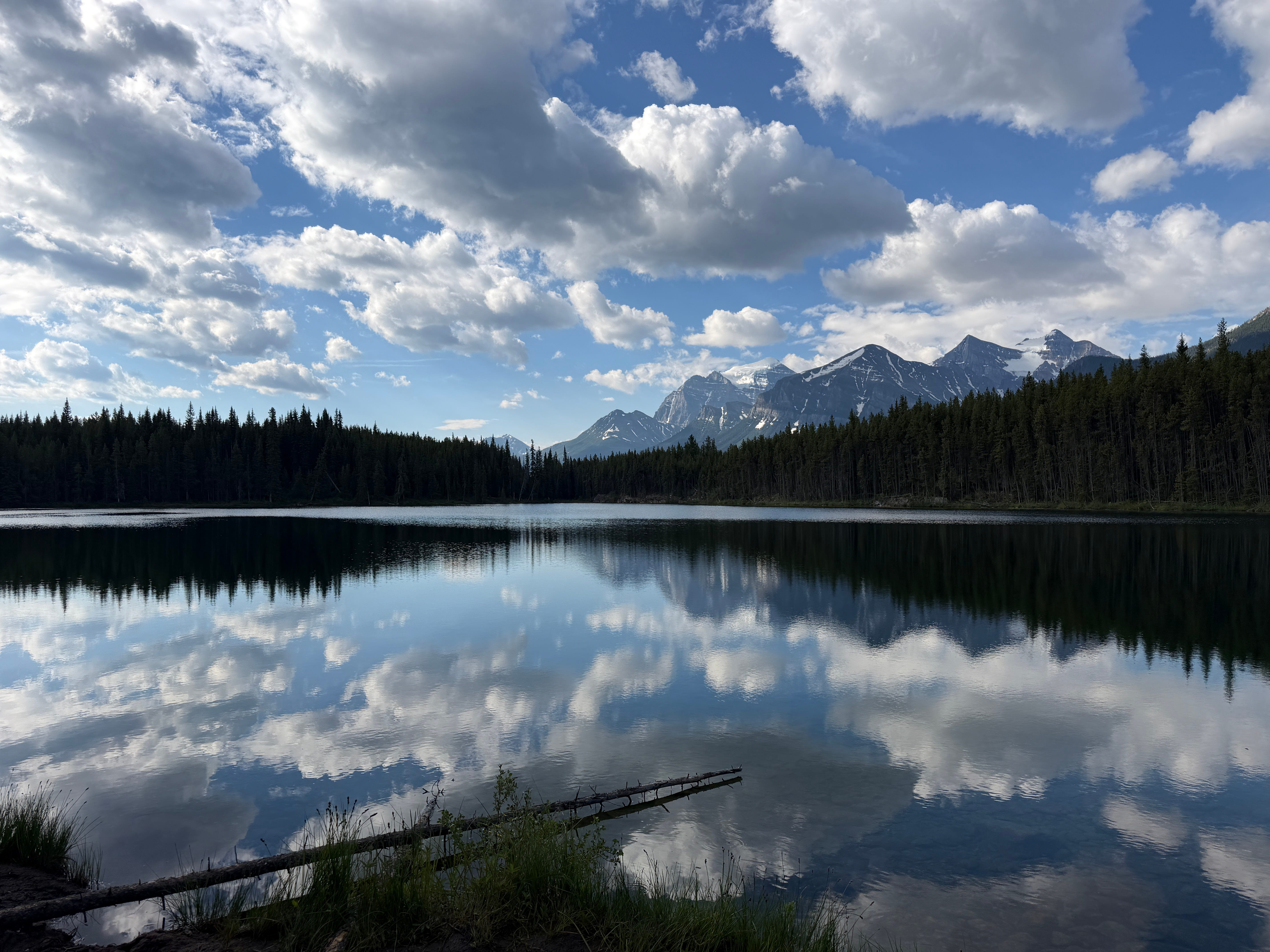
The next morning, we were back in the truck, headed north along the Icefields Parkway. The morning started out fine enough... we made stops at various lakes and viewpoints. It wasn’t long before there was a haze in the air though.
The haze was wildfire smoke from fires further northeast in Alberta and Saskatchewan, which was blowing in with the southwesterly winds.
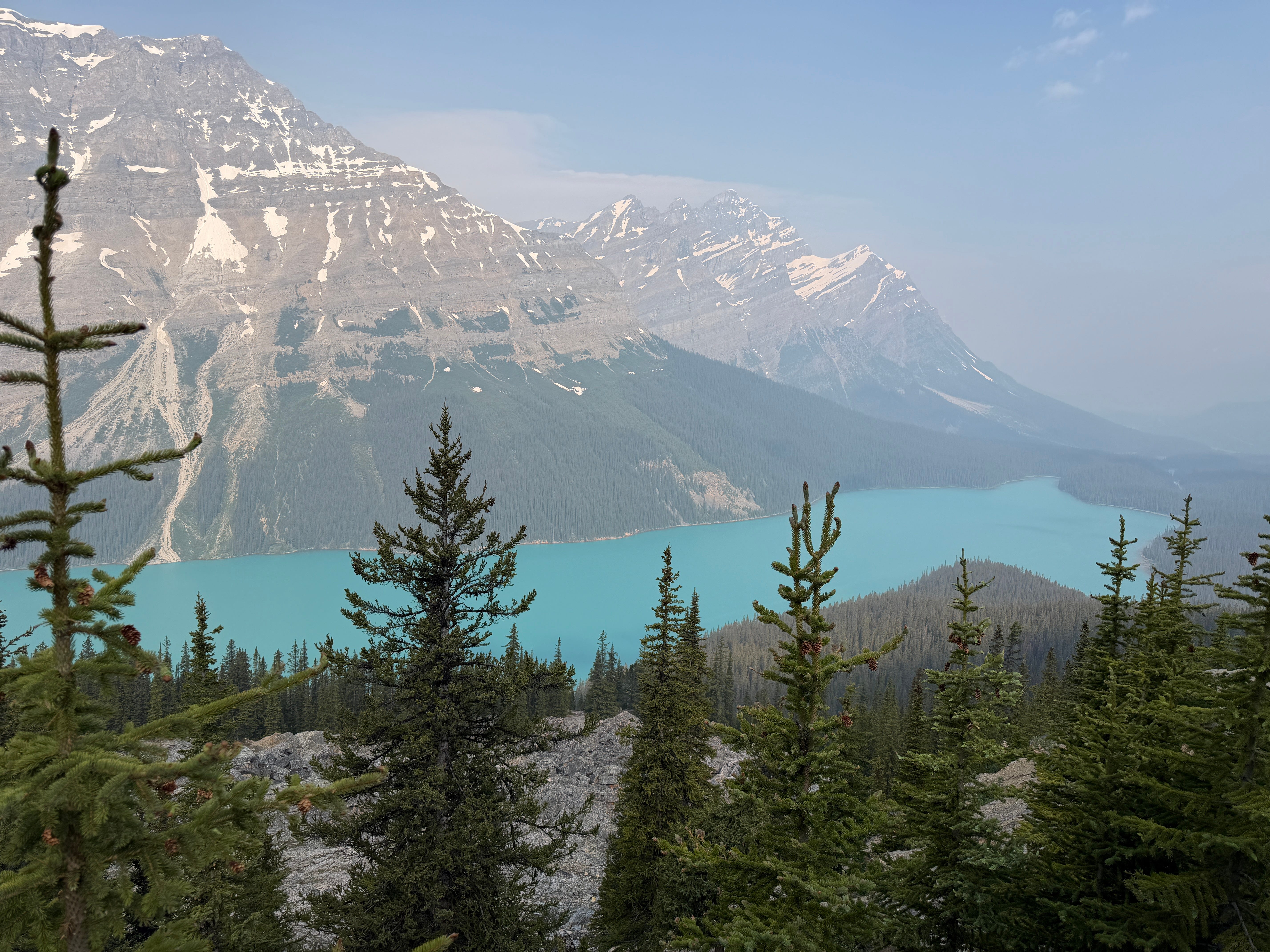
At we head north, the haze grew thick, eventually completely choking out the scenery. We could barely make out mountains that were right next to the road. We could smell the smoke even in the car.
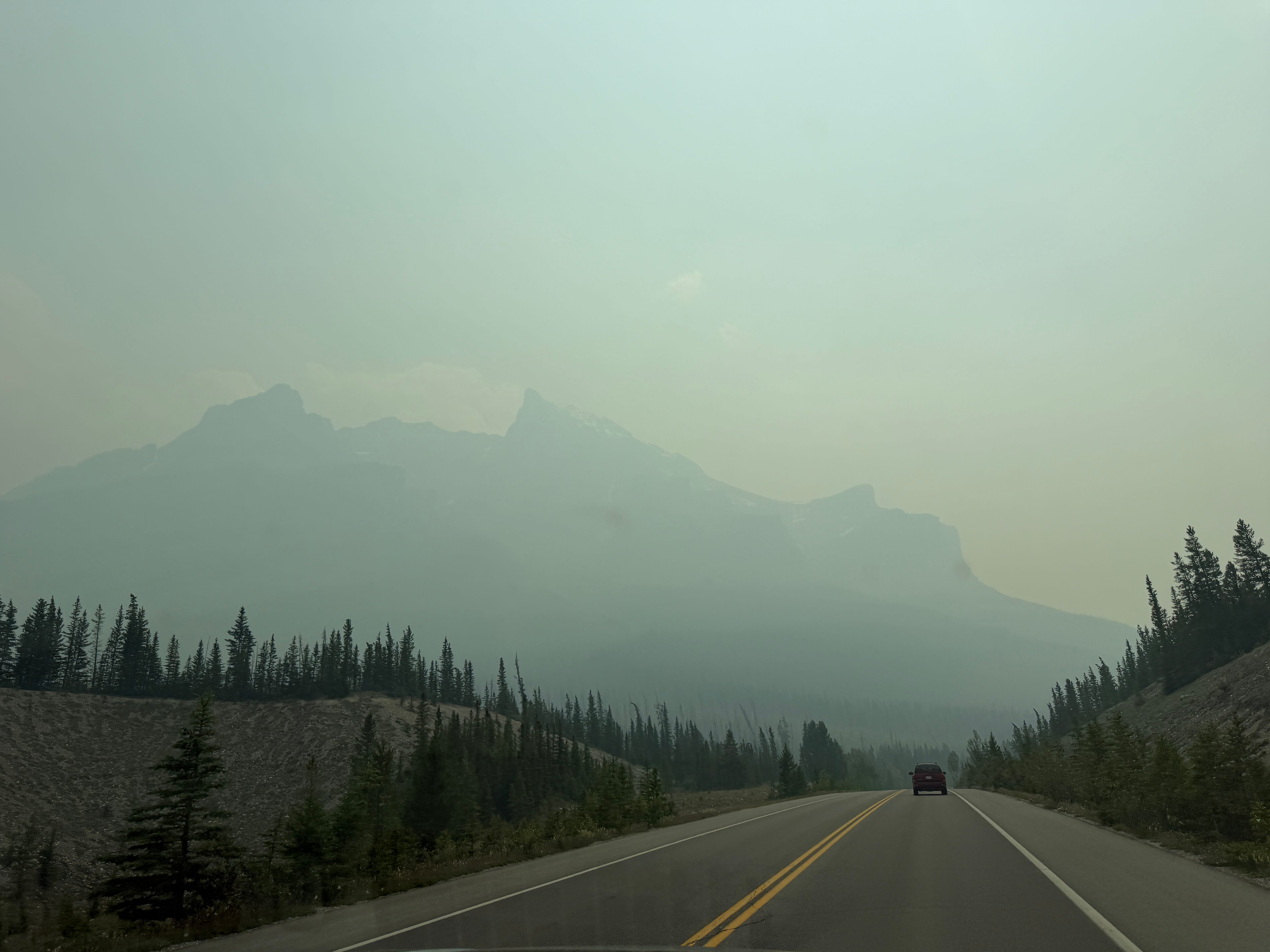
We continued on like this for a while, but it was only getting worse. Southwest winds were forecast over the next several days. Given that we only had a couple of days to explore the Icefields Parkway, there was a good chance the air quality and haze wouldn’t clear while we were there.
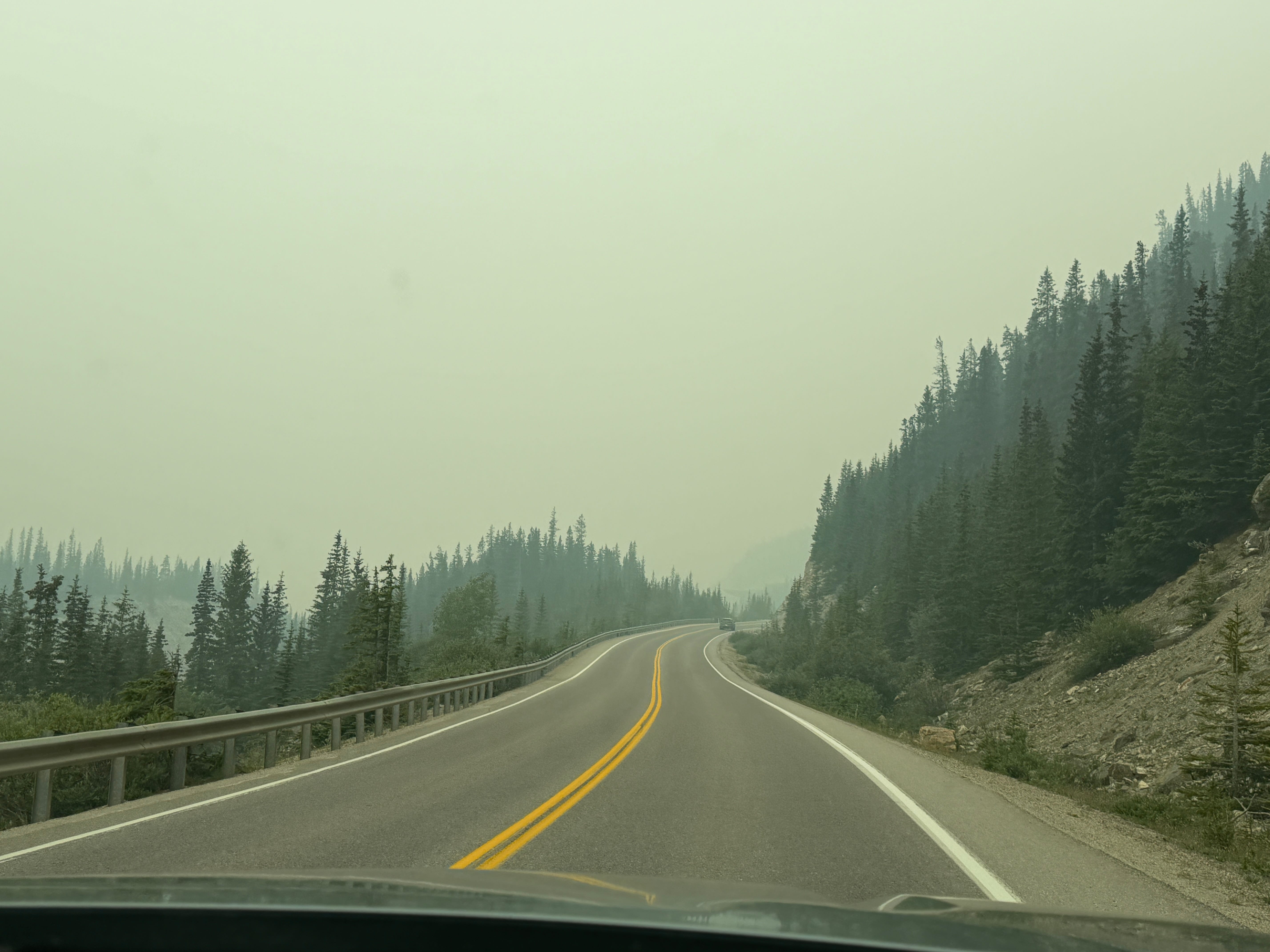
We did what any rational human being would do: we jumped ship. We abandoned our plan to continue up the parkway and instead turned around. There was no point in continuing toward Jasper without being able to see anything. We were just wasting fuel.
It was clear that the Icefields Parkway was simply not meant to be right now.
As potentially a silver lining to what was otherwise a very smoky cloud: the wildfire smoke provided an even stronger impetus to return the Icefields Parkway on a bikepacking trip in the future. We already knew that we wanted to do this. But perhaps if we’d made the full drive up the Parkway on nice clear days, the return on bikes would be that much easier to put off. We’d already have seen it, after all. But we wanted to bike it. So maybe this was all a blessing in big smoky-veiled disguise.
And so... we have have unfinished business with the Icefields Parkway. When we make our return, I’ll be sure to chronicle it here.
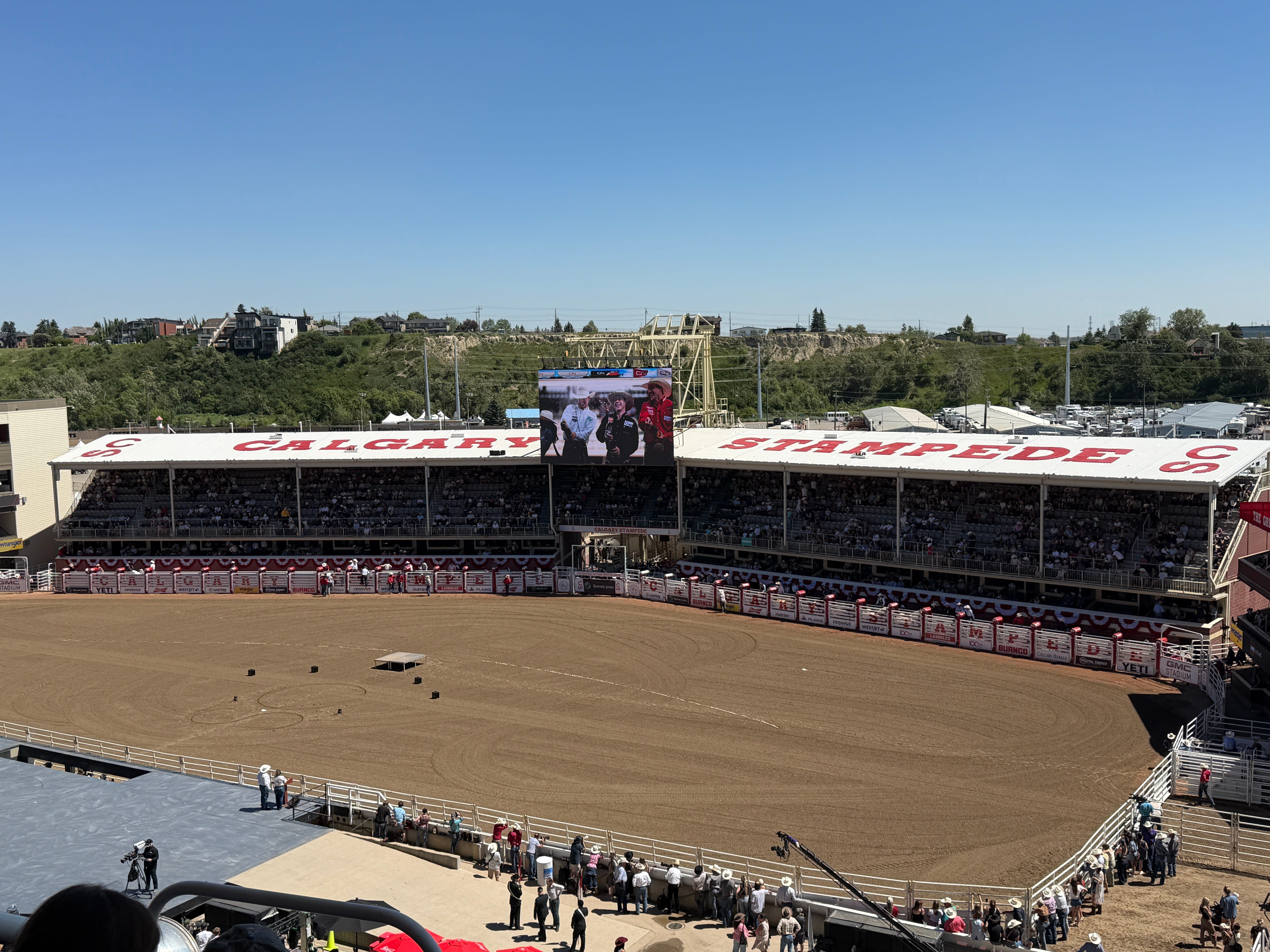
We spent the remainder of the week back in Calgary and even went to the Calgary Stampede—the world’s largest rodeo! And now we’ve been to a rodeo. Check.
A (Very Short) Bike Update
I’m sure you’re wondering how Bear is doing. Well, he is currently tucked away in our storage unit, having only one wheel.
Back in the U.S., we got my rear wheel all boxed up and shipped to Solace Cycles, who did the original build of my bike. The owner there has been fantastic and is taking care of the communication/warranty with Onyx (the hub manufacturer).
The most recent update is that Onyx is sending him the parts for the rebuild, but we don’t have any specifics yet on the exact nature of the failure. I’m sure as soon as I send this blog out, we’ll get an update.
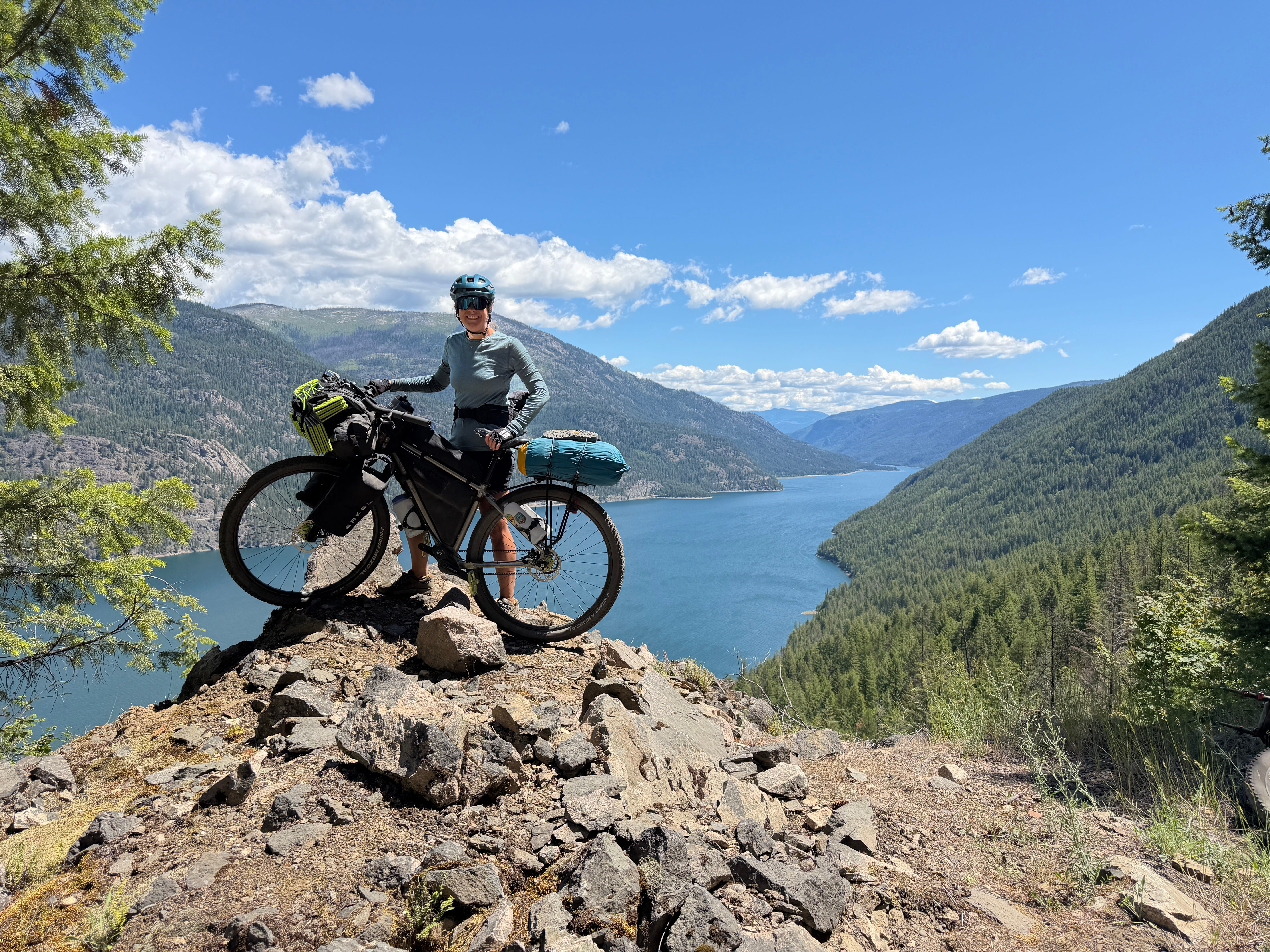
Roll Call!
What about some of the people we met along the route and mentioned from time to time here?
Though we met several people along the trail, there are only a handful that we saw with enough frequency to be mentioned here.
Piper
You may remember us mentioning Piper in the beginning. Along with the two of us and one other guy, Wes, she was in the original quartet that set out together from Victoria. We biked with or saw both them off and on during the first week, though the last time we saw Piper was in Squamish. The three of us took the gondola up the mountain, which is really the best way to climb a mountain—certainly the least tiring.
We kept in touch with her throughout the journey via WhatsApp, all checking in on each other. Since she was taking fewer rest days, she was ahead of us and always provided great beta regarding the upcoming trail. We were likely of far less use to her, but we all had fun chatting.
After she’d taken a planned trip home in late June, we all found ourselves in Lake Louise at the same time, as she and a friend were biking from Banff to Jasper. We chatted with her at a restaurant in Lake Louise for a bit and gave some friendly honks to the two of them when we saw them biking up the parkway the next day.
Despite the wildfire smoke, she and her friend persevered and made it to Jasper.
Piper is in for the long haul, planning to ride the Great Northern Bikepacking Route in its entirety to the eastern coast of Canada. We’ve been following her on Instagram and chat with her from time to time on WhatsApp. She’s currently somewhere in Minnesota (the route dips into the U.S. for a bit through northern Minnesota, Wisconsin, and Michigan to avoid what would otherwise be highway in Ontario). We are rooting for her! We know she can make it!
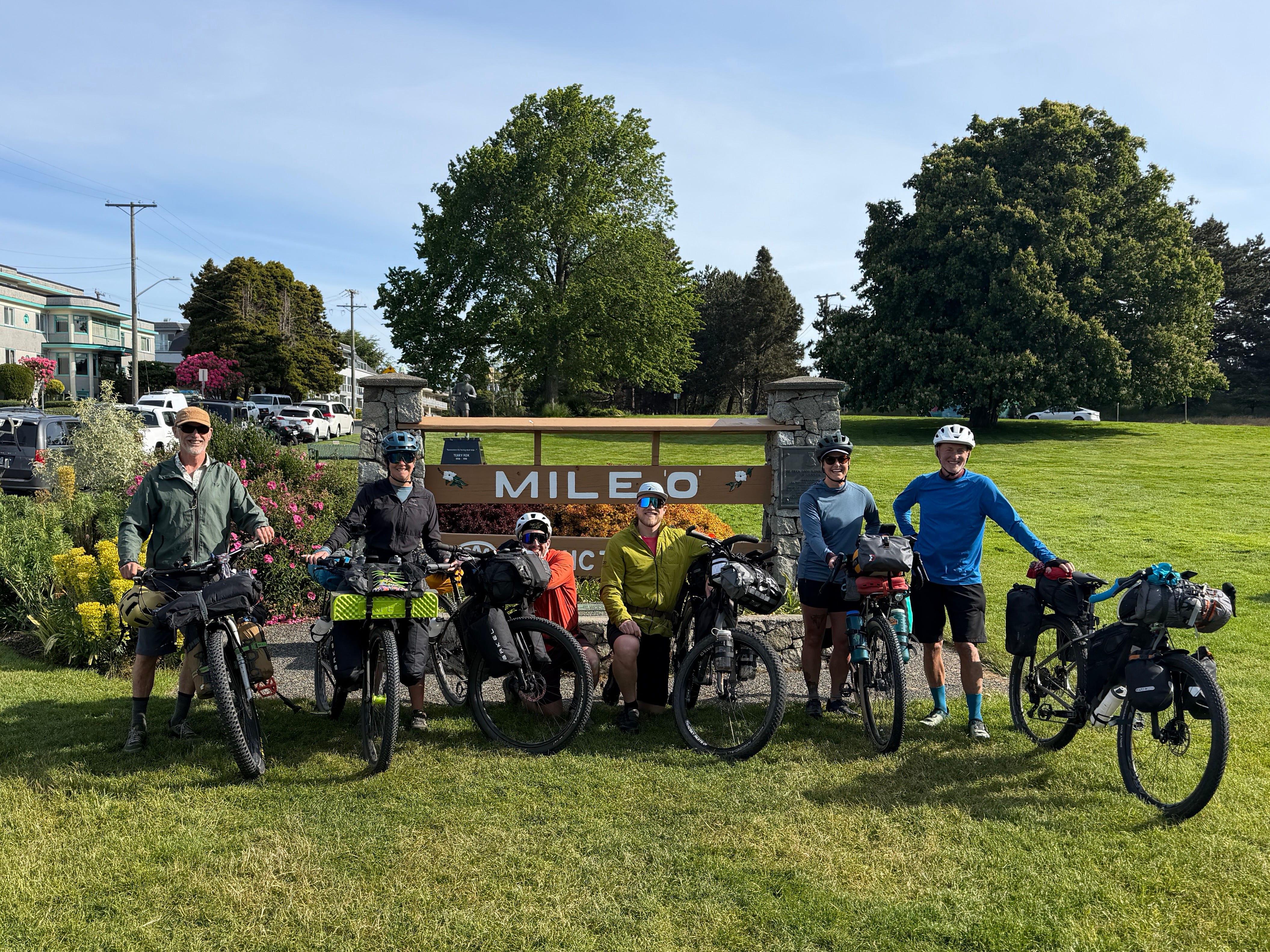
Wes
Wes was another of the original quartet that started from Victoria. He was set up on a new rig and had admittedly not had much time to ride that particular set up. His original intention was to take about a month to ride the British Columbia section. Unfortunately he started having knee issues and bailed from the trail for some recovery days once we reached Horseshoe Bay. We never heard from him after this, so we assume that he didn’t end up getting back on the route. He’s from British Columbia, so hopefully he can tackle the route again some day!
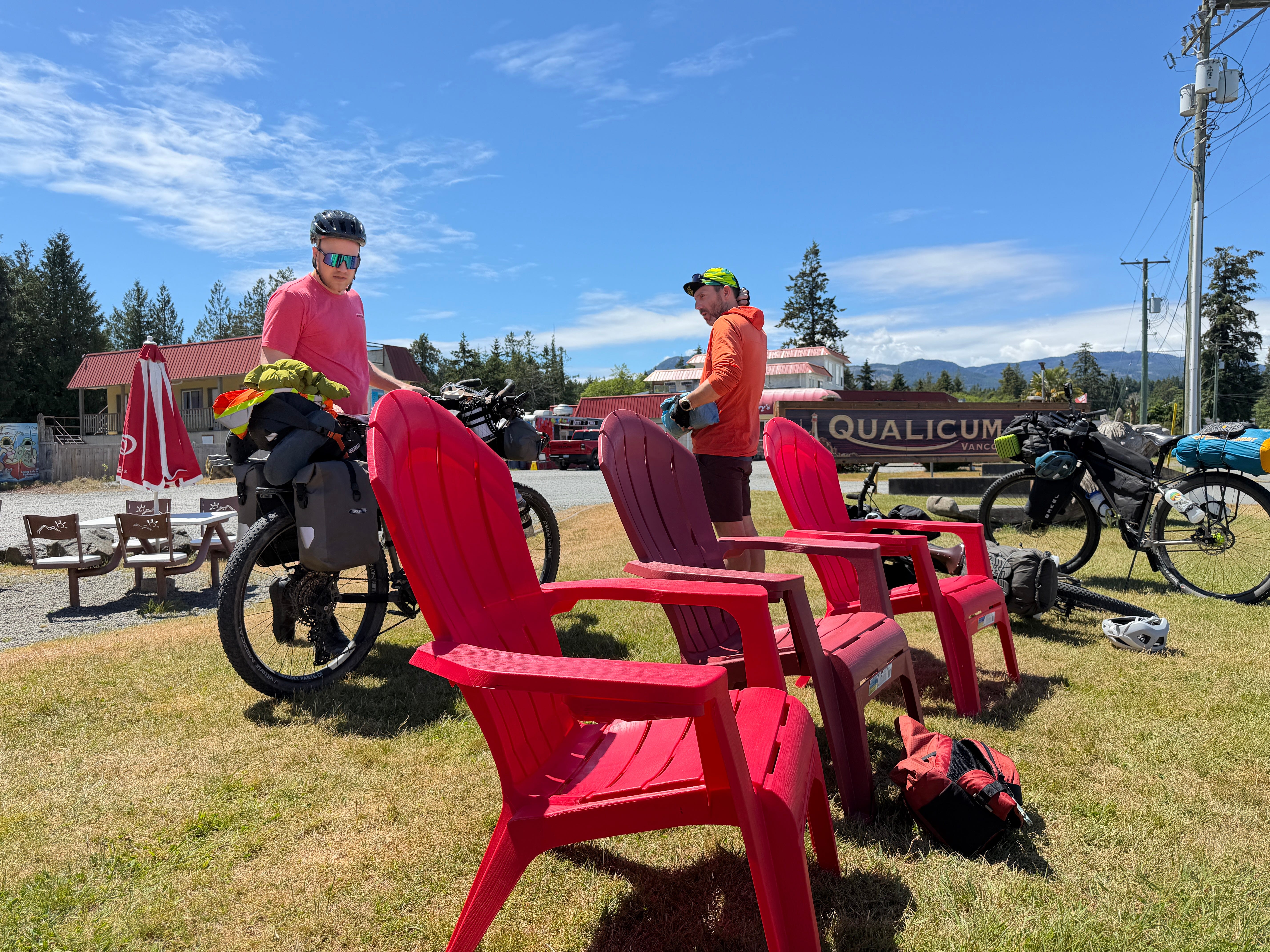
Steve & Melanie
We met Steve and Melanie at a bakery outside of Pemberton/Mount Currie on our way to Seton Portage (different Steve from the one in the Grand Depart pic above). While at first I thought they were a duo, they had only met recently and hadn’t been riding together long. Steve was from Ontario and Melanie from British Columbia.
We would see Steve a few more times after this, including camping at the site next to him at Marble Canyon Campground the day after Lillooet. I believe the last place we saw him was in Merritt, where we watched his bike while he ran into a Dollar Tree (or something similar) to get some cheap rubber slide sandals.
After Merritt he was planning to pick up the pace, as he wanted to get to Banff and be finished and home by early July. I believe we heard from Melanie later that he had indeed done this.
While we originally met Melanie outside Mount Currie and saw Steve several times after this, we only saw Melanie again once, when she rode up and camped just opposite us at a campground a day out of Fernie. Her ride was both pleasure and work, as she was a writer and had several different articles lined up regarding different aspects of the route/travel.
It was great to catch up with her. She was planning to take some rest days in Fernie, as well, and then meet her husband in Banff on July 4. We didn’t have any contact information for her, but we assume she made it. :)
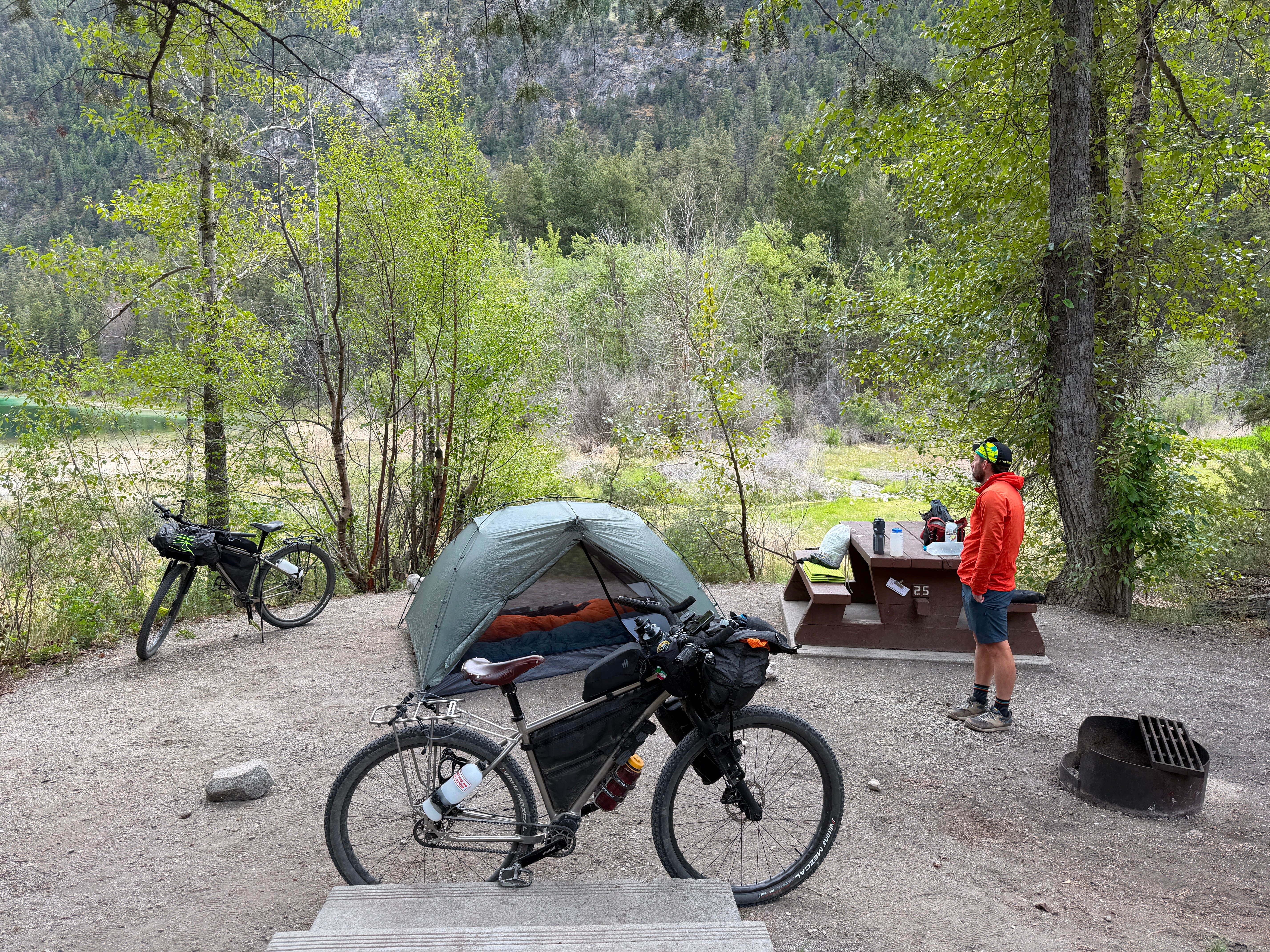
Alex
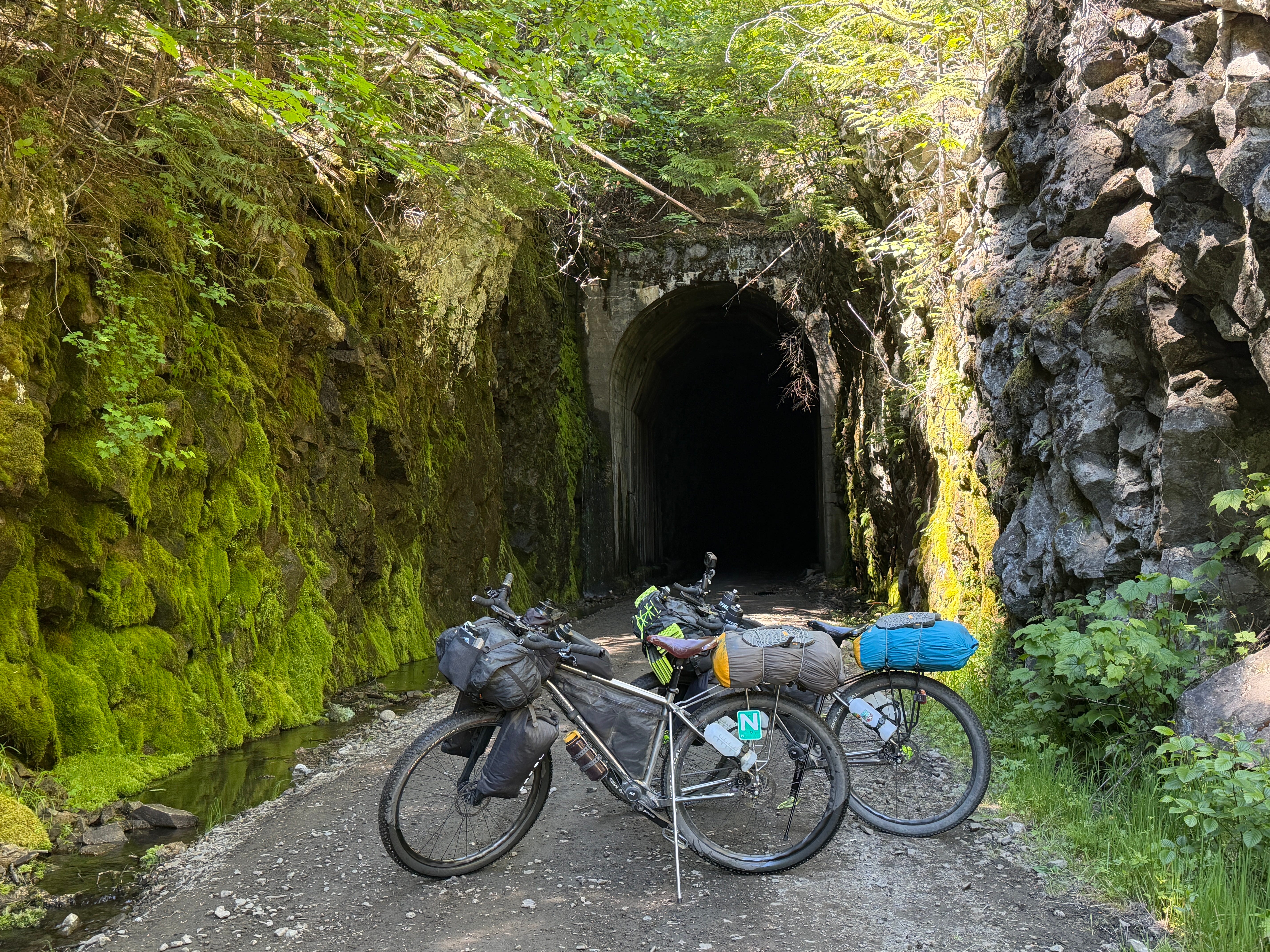
Of all the characters we met, Alex was by far the most quirky. An Aussie that was loving life, Alex had thrown some bags on his mountain bike and set out for what he thought would be a four-day bikepacking trip. All said and done, he would be gone for over three weeks.
When we first met him, he was basically trying to figure out exactly how far he could go. Once he was off the Kettle Valley Rail Trail, then what? Shawn told him where our route was going and some different routes he could look up on Ride With GPS (the route app we used). Once he learned he could get to Banff, and even further, he just kept going.
We ran into him several times along the route in various towns after that. The last time we saw him was actually in Banff. As we checked in at the campsite, we heard a familiar voice at the check-in window one lane over. It was Alex. “That’s cheating!” He said when he saw we were in a pick-up truck.
We met him at his campsite later and caught up on his journey since we’d last seen him, which I believe was in Salmo, the day before heading into Nelson. He’d ripped mountain bike trails in Nelson and then taken the same route over Gray’s Pass, through Cranbrook, and up toward Fernie, arriving in Fernie a day after us. We heard about his wheel breaking down (too many busted spokes), getting it rebuilt in Fernie, and his grizzly bear encounter on the route between Fernie and Banff. He’d left Fernie a day before us, so had already been in Banff for a day exploring hiking trails.
Shawn kept in touch with him on Instagram. After taking another day to hike in Banff, he head north through Lake Louise and continued on to end his ride in Jasper.
What We Learned
If we did this trip all over again, we might just do the same thing. Only not have bike failure. We got worn out, but when I look back through the pictures, it really was a fun journey.
But really what we learned is that not everything needs to be a massive adventure. When we set out, we thought... well, maybe we’ll go across British Columbia. Then maybe we’ll continue down the Continental Divide. Or maybe we’ll go across Canada. We’ll see what happens!
What happened is we hit our quota for rough backroads. It is tiring on the bum and eventually, the spirit. But this doesn’t mean we still wouldn’t enjoy backcountry routes, I think we’d just enjoy them in smaller doses. A good weekend trip or even the right one-to-three-ish week trip. But, we don’t necessarily need to go across an entire country. Especially a big one.
We also learned that if there is a particular section that you REALLY want to do, maybe just start with that (if it makes logistical sense, travel-wise). On the one hand, it’s nice to build up to an awesome grand finale. For us, this would have been the Icefields Parkway. But on the other hand, by the time we got there, we were getting a little worn from the journey. And, as it would turn out, we wouldn’t make it at all.
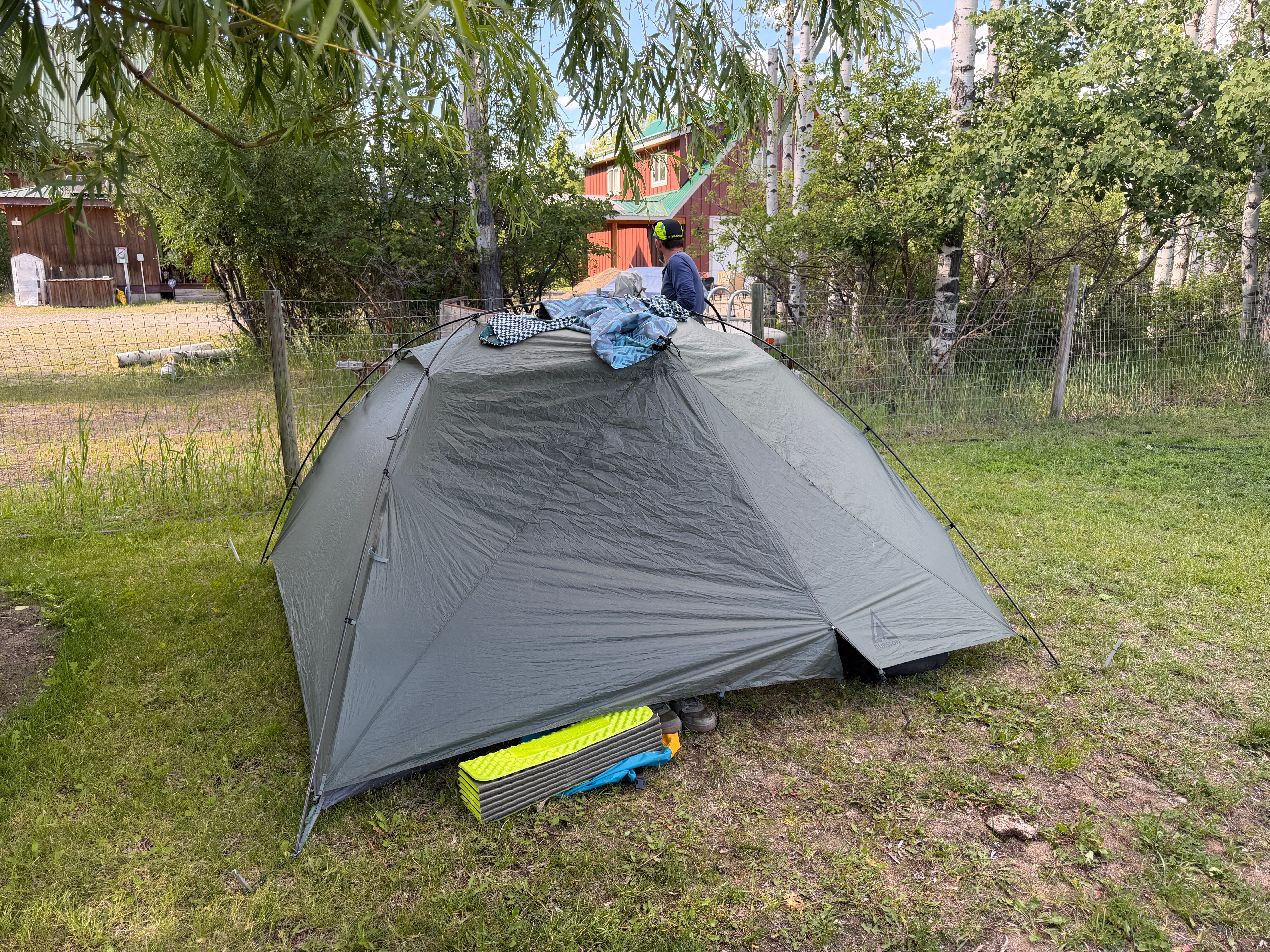
We are also getting old and crotchety. We don’t like bugs (particularly the biting kind). We do like good sleep. We like camping, but don’t love campgrounds. We don’t like having to worry about grizzly bears. Going to bed clean and not sticky and sweaty is super nice.
Does this mean we won’t do any more backcountry adventures? No. I’m sure we will.
When we set out for this trip, we set out as a lifestyle, thinking... we may be gone for awhile. And so, we packed things that we wouldn’t take for shorter trips. We had our laptops. Our rear pack was actually a hiking backpack in case we wanted to do some hikes at some point (lol). And there are a few other little things that we simply wouldn’t bring if we were just planning a more focused shorter bikepacking trip.
And this is how we would treat any future bikepacking trips, as shorter focused adventures. We’d travel lighter. We’d also be interested in some bike touring routes that didn’t include bringing camping gear or food for several days. These travels would be biking between towns, staying in towns, eating in towns. Honestly a lot of what we were doing on this trip only with less stuff and on nicer roads, since it seems we carried camping gear around to not really camp that often.
We’ve also learned that we will probably never travel on the Continental Divide, since we’ve dodged it twice now. 😆
What’s Next?
Shawn and I have spent the last month back in Iowa and Colorado mostly visiting family. We’d originally thought that we could still conceivably be on our bikepacking journey through the fall (or longer!), depending on how we were enjoying it and how far we wanted to go.
As it seems to happen anytime we get on/near the Continental Divide, we change gears and head to Europe. In 2024, after abandoning our Continental Divide Trail thru-hike in Grants, New Mexico, we made a quick hop across the pond and hiked the Camino del Norte through Spain instead. Muy bien.
This time, we’re doing something similar. After a month of getting our ducks in a row, we’re heading back over to Europe for a couple different 7-10 day hikes. Feel free to make any guesses as to where below (if you don’t already know).
I’ll chronicle the hikes here, so stay tuned!
Also, a bit thank you to everyone that followed along with our journey. We appreciate all of the messages, encouragement, and support we received throughout the journey!
As always, well written. All the best to you and SB. Your courage, adventure and willingness to share are truly a treat. Stay safe and healthy and keep sending us your adventures. Jim
Great to have the wrap, closure always feels good!